
A rental conversation starts with what you have used before and who is choosing the conditions for your session. The name of a famous beach and your height tell the shop only part of the story. If you have booked a lesson, ask the instructor whether a board is included and what they want you to use.
Explain your experience in practical terms
“I've had two lessons and still need a cue to stand” is more useful than “almost intermediate”. If a board worked for you, bring a photo or its length and volume. Ask why a suggested board makes sense for the session you have planned. For a comparison of shapes, see the guide to surfboard types.
Inspect the board together
Look at the nose, tail, rails, deck and fin area with the shop. Ask the staff to record existing damage. If photos are allowed, take an overall picture and close-ups of marked areas. Confirm whether fins and a leash are included and ask the staff to check their condition.
Know when charges apply
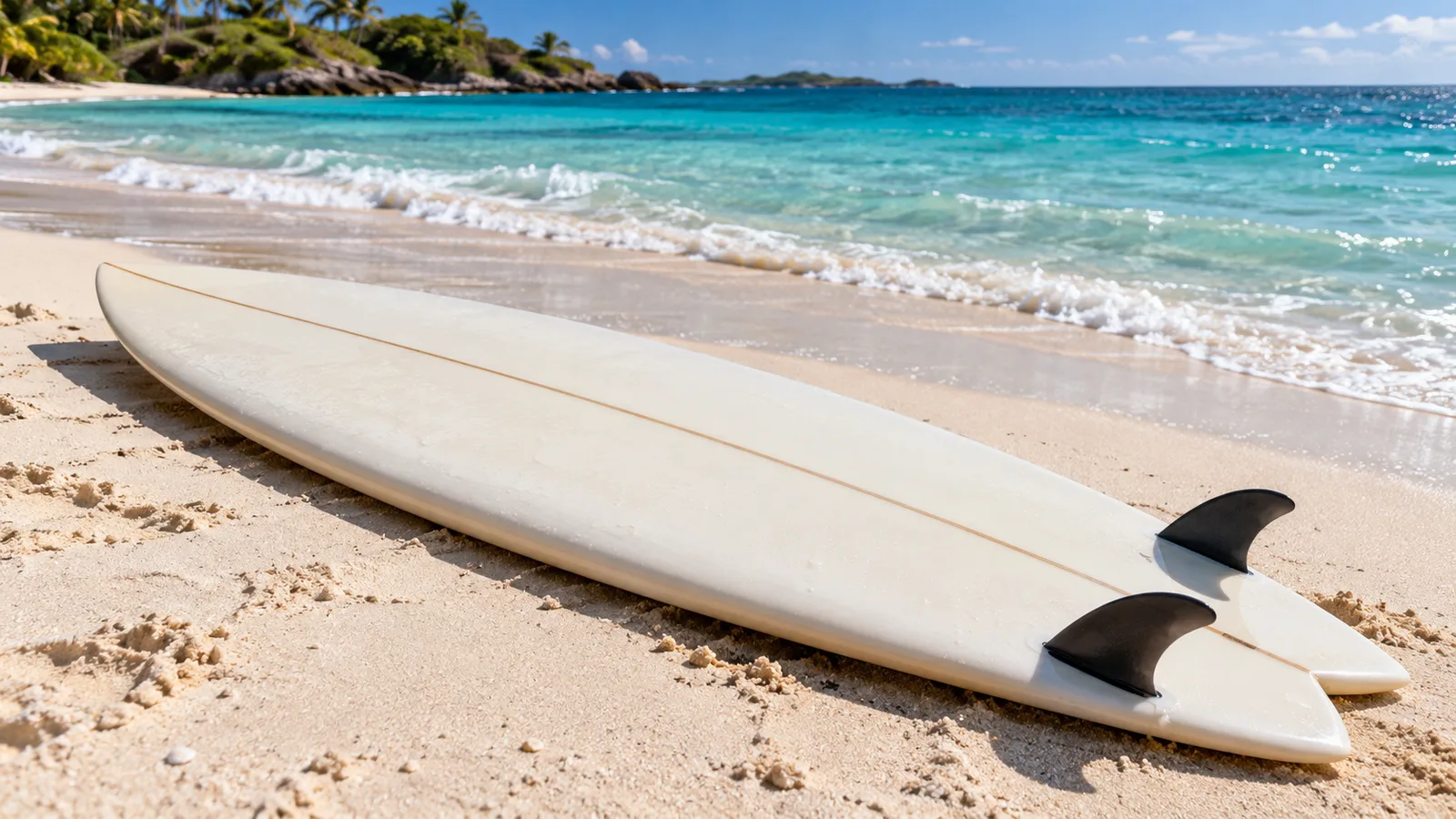
Ask whether the rental is billed by the hour or day, how the deposit works and when it is returned. Ask how damage charges are assessed. Write down the return time and location and check whether you can exchange the board if an instructor suggests another size. The terms can vary from one shop to the next.
Work out how the board gets back
If you might change beaches or finish after closing, agree on the return before leaving. Confirm that your planned transport can safely carry the board. Give the driver its approximate length before the pickup.
A conversation you can use
“I've had two lessons on a wide board and I'm going with an instructor again tomorrow. Can I check the model with them? Can I exchange it if they suggest another size? Could we record this scratch on the tail and confirm the return time?” You leave with a board, a record of its condition and an agreement you can refer back to.
One session or several days
On a short rental, the return deadline and the ride back matter most. With several days, add storage, exchanges and what to do if damage occurs. Ask whom to call if you notice a problem as soon as you collect the board. Then you can discuss it before taking the equipment into the water.
Keep a five-line rental note
Record the board model, its initial condition, included equipment, deposit and return time. If the shop agrees to exchange it after you speak with your instructor, add that too. Ask the staff to confirm your note against the rental terms. It gives you one account to refer to even if someone else is working when you return.
🧾 Read the rental agreement by category
| Item | What to record |
|---|---|
| Board and equipment | Model, fins, leash and bag if included |
| Condition | Damage noted with the shop before pickup |
| Payment | Fee, deposit, refund timing and possible extra charges |
| Exchange | When you can swap boards and who confirms the arrangement |
🔍 Inspect it with someone from the shop
A photo can show the board's condition. It does not establish that both people agreed on it. Ask the shop to note visible damage in its rental record or confirm it in the way it normally uses. If the board looks more damaged once you lift it from the rack, show the staff before travelling to the beach and discuss whether it should be exchanged.
When the shop and instructor suggest different things
Ask the instructor which feature matters for the session. It might be stability or a size that helps with the movement you will practise. Ask the shop for an option that matches that requirement. If the instructor supplies equipment, you can defer a separate rental until you know what feels comfortable.
Plan the return before you pay
Set a reminder that gives you time for transport. If the shop will close before you get back, ask about the options before paying. Do not leave the board by a locked door on your own initiative. Find out who can take it back and confirm that the return is complete.
🧩 If the shop has only one board to offer
Ask what you can realistically practise on it. If you need to work on lying in position, let the instructor confirm whether the equipment suits that exercise. If the shop has no alternative and you are unsure, pause and speak to the instructor. A short rental on the wrong board can take up most of the session. For several days, discuss an exchange in advance. Ask who approves it, when you need to return and whether an extra fee applies. That lets you compare two shops by their actual terms even when the day rate looks similar.
When to make the rental part of an agreed lesson plan
A rental shop can help fit a board, but the instructor knows the exercise and will judge the conditions on the day. Ask whether you need to rent separately. If you do, ask what characteristics they want and whether you can send a photo. Agree on what happens if the preferred model is unavailable. When the lesson location is only confirmed in the morning, check when the shop opens and whether collection will be rushed. Decide which matters more: having equipment the evening before or choosing after you have spoken to the instructor.
Keep the details attached to the board you inspected
A shop can have several boards of a similar size and colour. Note the model or identifying marks of the one you inspected. If a staff member goes to get fins or brings another board, compare it with the one you saw. Ask how the agreement identifies the equipment before paying. Save the photo and record with the shop's contact. If the board is delivered, agree on an inspection at handover, while the perso
n delivering it is still there. That is an easier moment to resolve a scratch or a missing item.
Get a clear answer on the deposit
Ask how and when the deposit is returned and who assesses any extra charge. Find out whether you get confirmation of payment and return. If the arrangement is verbal, send a short note with the amount, deadline and exchange terms as you understood them. Give the shop a chance to correct it. With a multi-day rental, ask what happens if you return early or exchange a board halfway through. Two shops can advertise similar rates while handling these situations differently. Compare the agreement you will actually use before paying.
Check three things before travelling to the beach
Make sure you have the same board, the full equipment package and an agreed way back. If transport is separate, confirm who handles loading and when you can expect the vehicle. An exchange requires a fresh condition record for the replacement board. Do not assume the old notes apply. If you notice something missing, speak to the shop before setting off. Returning for one item is simpler while you are still near the shop than after the rest of the group has gone to the water.
Return the board with the same record
Arrive with time to go over the same areas you inspected at collection. Check the fins, leash and bag against the note. If someone else is working, show the original record rather than trying to remember every mark. Ask what closes the rental and what confirms the deposit is returned. If there is a question about damage, ask the shop to identify the area and explain which term applies. A clear record makes it easier to compare the decision with the agreement for that particular board.
An example of choosing between two shops
Say both offer a similar board. One allows a swap after the lesson, while the other gives you a later return deadline. Ask the instructor how likely a swap is and who would confirm it. Then check the return journey and opening hours. If the lesson is near the first shop, exchange terms may matter more. If you are coming back from further away with a driver, the extra time may matter most. Compare the total arrangement with transport, deposit and terms before choosing by the daily rate.
What to check when the shop delivers the board
Ask which board is coming, what the package includes and how much time there is for inspection. At handover, check that you have the board you discussed. If a shop representative cannot wait while you inspect it, agree on how quickly you can send photos and get confirmation. Save a contact that is answered during the rental. If you spot a mark before using the board, report it then. A clear photo and a description make it easier to arrange an exchange without changing the whole day.
If the session changes after collection
Ask the instructor whether the meeting place is the same and whether the selected equipment still suits the lesson. If the board needs changing, call the shop before leaving and ask what is available and when you can get it. Compare that trip with borrowing equipment from the instructor if available. Keep confirmation of any change to the deposit, deadline or return point. A new package deserves a new condition record. Ask for confirmation when you hand back the first board and inspect the second one separately.
Describe a mark so both people can find it
Start with the location: nose, tail, rail or fin area. Take an overall photo that shows where it sits and a close-up of the mark itself. Ask the shop to add it to the rental record or confirm your message. If damage occurs during the rental, report it through the agreed channel and ask how to return the board. Do not conceal a mark or arrange a repair without the shop's knowledge. Both parties should be able to refer to the same place on the same board.
Common questions
Do I need to remember an exact board length?
If a board worked for you before, the dimensions are a useful starting point. The next choice still depends on the conditions and your instructor's advice.
What should I save on my phone?
The model, agreed condition, return deadline and contact details. For a multi-day rental, keep the exchange terms there too.