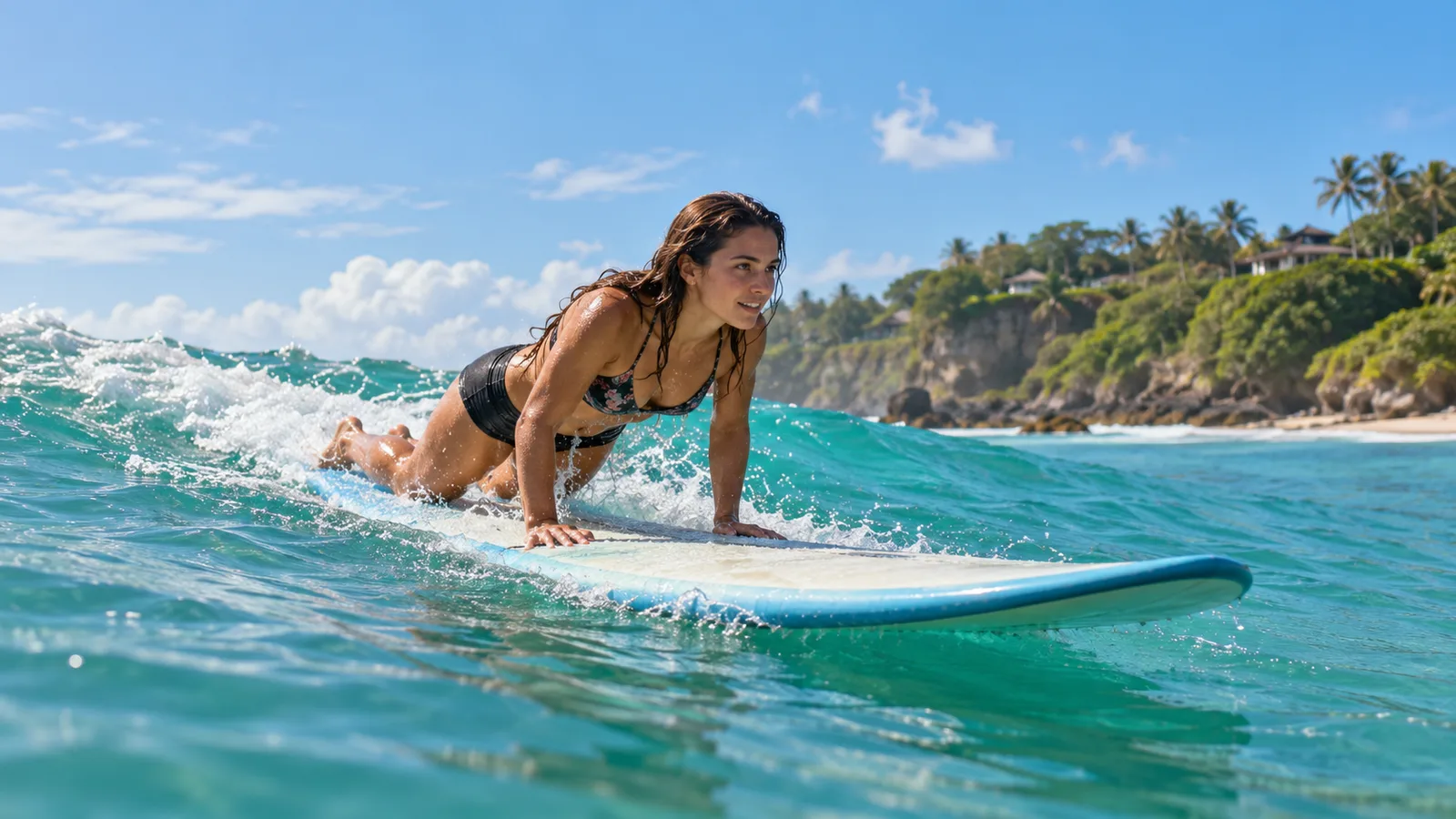
Judge a first lesson by what you understand and can repeat. If you leave knowing where to lie on the board, when to start paddling and how to stand with an instructor's cue, you have made a start. The number of waves you ride depends on the conditions and how much time you spend learning on land.
Before you pay
Tell the instructor how comfortable you are swimming in the ocean, whether you have used a board and what you want to learn. Ask who chooses the location, what happens if conditions change, how many learners are assigned to each instructor and what the price includes. Confirm the meeting point and whether it is at the lesson beach. If you are given only the name of a famous break, ask how the instructor will decide whether it suits a beginner that day.
What to cover on shore
Ask the instructor to show you the practice area and the route out of the water. Make sure you understand their signals, how to ask for a rest and what to do if you drift out of position. On land it is easier to see where your hands go and how you move your weight. If a demonstration goes by too quickly, ask to see it again slowly. Read the surf pop-up guide.
Pack for before and after the session
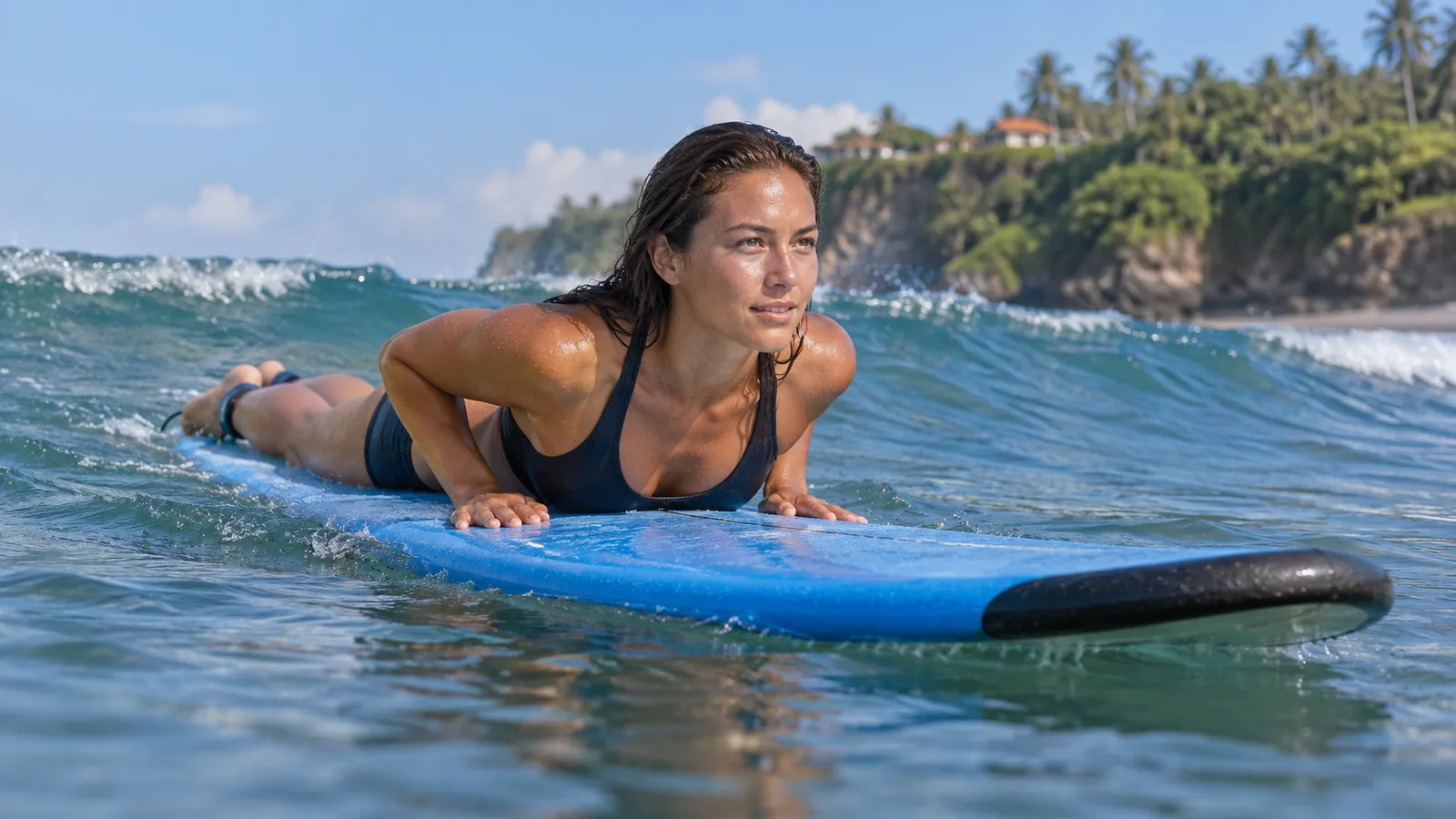
Keep water, sun protection and what you will wear in the water in one easy-to-reach bag. Keep dry clothing and a wet bag together for afterwards. Ask where you can leave your phone and documents. Confirm what board and leash the instructor will supply and whether any other gear is your responsibility.
When the plan changes
A change of time or beach can be part of a normal lesson plan. Before setting off, ask who confirms the new meeting point and what happens if the session is called off. In the water, tell the instructor you are tiring before it becomes difficult to concentrate. If you feel uncomfortable, ask for a break and follow the instructor's directions.
Make the debrief specific
Ask for one thing you did well and one thing to work on. For instance, you may have kept the board straight while lifting your head too early. Write down the cue in words you can remember. Start there next time so you can compare a familiar movement across sessions.
How to tell whether the instructor heard you
Ask for a short recap of the lesson plan. If you mentioned that you tire while swimming or feel uneasy without your feet on the bottom, ask how the plan accounts for it. Agree on breaks and a clear signal. After the demonstration, repeat the task in your own words so the instructor can catch any misunderstanding before you enter the water.
Keep the first session simple
Choose one task for a series of attempts. You might start by keeping your position on the board, then talk about standing after several repetitions. If you get a new cue each time, ask which one matters most. A single goal makes it easier to say what worked in the debrief.
📋 Compare two lesson offers before booking
| Question | What to clarify |
|---|---|
| Who chooses the beach? | Who makes the call on the day and how they communicate changes |
| How is the group organised? | How many beginners are in the water together and how they are supervised |
| What is included? | Board, leash, clothing, transport and cancellation terms |
| How will the lesson finish? | Whether there is time to review one good attempt and one difficulty |
🏄 Choose a first goal you can observe
If you do not know where to lie on the board, ask to start there. If you can do the movement on land but lose position in the water, say that specifically. A goal such as “stand up” contains several different tasks. Work out which one is holding you up before asking to make the lesson faster.
When the group has different levels
Ask whether learners wait for each other and what happens if someone needs another demonstration. Mention mixed experience when booking. One person may never have surfed, while another already feels comfortable on the board. It is easier for an instructor to propose two tasks before the session than to discover the difference once it starts.
What to check halfway through
If the cues come too quickly, ask for one movement to watch for in the next few attempts. Check that you both mean the same point in the movement. You may think you are being told to stand faster when the instructor is asking you to move your hands. That distinction is easier to sort out on shore.
📝 A realistic first-lesson request
Imagine two friends. One swims confidently but has never been on a board. The other has rehearsed on land but tires quickly in the water. Say exactly that when booking. The instructor can then explain how breaks will work and whether the learners can do different exercises. On shore, each person repeats their own goal in one sentence. After the session, compare what happened with those goals. One learner may have found a good position on the board. The other may have learned to pause and say when they need a break. Both observations give the next instructor something specific to build on.
Send the school a useful description of your experience
You might write, “I am confident in a pool but have hardly swum in the ocean. I have never stood on a board. I want to learn how to begin and what to do when I get tired.” Add the number of learners and the language in which you prefer to receive cues. If you have a particular concern or need an adaptation, mention it before paying. Ask what the instructor considers a suitable first goal and whether there will be time to explain signals on shore. Their answer helps you see whether they understood the request before you settle the time and place.
Check the arrangements in under a minute
Before setting off, say four things out loud: where you meet, whom to call, what equipment is included and when the location is confirmed. Keep them in a note. Work out how you will leave afterwards, especially if your phone and bag will be on shore. If you mee
t somewhere other than the lesson beach, record both points. Landmarks you know at one beach may not be useful at another. After a change, ask for the new place and time in one message. Forward that last confirmation to everyone taking part.
When people in the group need different attention
Ask how the instructor works with several learners. It matters what happens while one person practises and where the others wait. If you cannot see the demonstration, ask for another view. A cue given to another learner may solve their problem without helping yours. Check your own task separately. In a first lesson, it helps to know whom a signal is for and what the rest of the group does in a pause. Then you can watch other attempts without trying to apply every piece of advice to yourself.
A way to review one attempt
Ask the instructor to stop at one moment. Explain what you felt and let them explain what they saw. You may think you stood too late, while the instructor saw your position change before the pop-up. Agree what to repeat on land and what to try in the water. If nothing changes after a few attempts, make the task simpler before adding another cue. In the debrief, say whether you could remember the cue without prompting and whether it changed the attempt. That is more useful to take forward than a general judgement about whether you succeeded.
Choose a next lesson that builds on this one
Decide whether you want to repeat the skill or move on. If you cannot explain how the movement begins, ask to go through the sequence again. If it feels familiar but inconsistent, repeat it in conditions the instructor considers suitable. When you change schools, tell the new instructor what you tried, what equipment you used and which cue helped. If all you remember is the result, describe the attempt as best you can. A little specific information helps connect the sessions even when the next instructor is meeting you for the first time.
What to understand before you pick up the board
Ask which board is yours and how to handle it on land. Clarify what you do yourself and what the instructor checks. If your equipment differs from the one used in the demonstration, ask how the instruction applies to your board. You should be able to say where you wait, what signal tells you to begin and where you return. If any answer is unclear, work through it on shore. The time you spend making that sequence clear will save you from trying to hear a long explanation once you are in the water.
Ask about conditions even if you cannot read a forecast
Ask the instructor what they can see from shore and how it affects the exercise. Instead of asking if the surf is good, ask where your group will go, what might make them move and how they would decide to postpone. An assessment of one part of the beach is not a recommendation for the whole area. Ask why the chosen option suits your experience. If the conditions look more difficult than you expected, say so before entering and discuss alternatives. A plan confirmed the night before still needs to work on the day.
Make a short note after the lesson
Record the date, the conditions in your own words and the task you tried. Add the cue that helped and what still feels difficult. If you know the board model or approximate size, note it too. Th
is does not need to be a full report. It gives you a starting point next time. You might write, “I can lie in position, but lose it when I rush to place my hands.” Show the note to the instructor. They can check the observation and pick one exercise rather than guessing from a general impression.
An example of when to repeat a skill
Suppose you stood twice, but both times only after a last-second cue. Start the next lesson with the same movement and find out which cue you can notice yourself. If the conditions are different, agree which part of the sequence to repeat and what success looks like. Another learner might be working on how to tell the instructor they are tiring and return to the agreed area. Those results solve different problems. At the end, try saying your next step in one sentence. That checks whether you can actually remember it next time.
Common questions
What if I am not confident swimming?
Tell the instructor before booking and ask what swimming ability is required and what conditions they consider suitable. Make the decision about entering the water with the instructor on the day.
Can I take a lesson without my own board?
Confirm what is included. If a board is provided, ask how it will be selected and whether another suitable option is available if needed.