
A session can become the highlight of one person's holiday and the thing the other person spends the morning waiting for. At Surfside, each person can give the morning a plan of their own. Pick something you will both look forward to afterwards, then arrange a reunion that can survive a change in lesson timing.
Compare the two meeting points
One of you has a lesson or guiding pickup. The other has a route on land. Surfside is near Suluban, but a partner instructor may choose another beach. Compare those two points before planning a shared ride. It can be simpler to start separately and meet back at Surfside than to fit two different outings into one itinerary.
Make shore time an outing of its own
If you want to watch the session, ask where you can observe without getting in the way. If you prefer your own morning, plan a long breakfast and one walk. Check the tide and access before visiting Suluban. You can look at the staircase from above and change plans if the descent is awkward that day. Suluban Beach guide.
Meet somewhere you both know
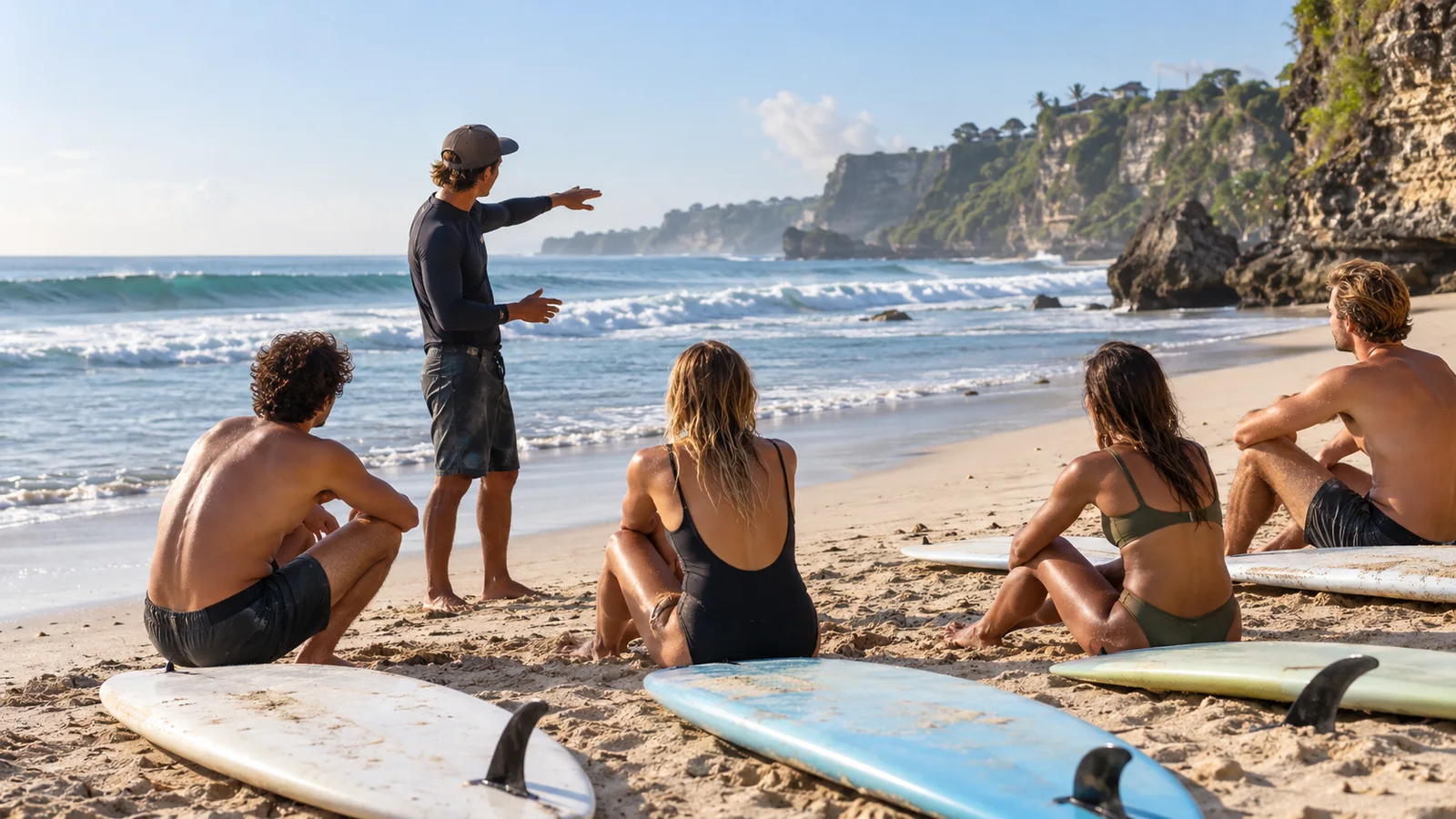
Choose a landmark you have both seen and agree on what happens if a session runs late. Put the meeting far enough after the lesson to allow for the ride back, a rinse and a change. That gives the person on land a real outing instead of a deadline they have to wait beside.
Use the evening for something shared
Compare notes over lunch and decide whether you want another outing or a quiet afternoon. When choosing a room, think about the time you actually spend together between sessions and walks. Couples can compare the Surfside suites, while a group wanting somewhere to gather can look at the villas.
If the lesson moves in the morning
Imagine the lesson moves to another beach after your partner has already planned a walk near Suluban. Keep the two plans separate. The surfer confirms the new meeting point with the instructor. The person staying ashore decides where to have breakfast and how far to walk. Your reunion point can stay the same even when the two mornings start in different directions.
What to ask at Surfside the day before
Reception can help put you in touch with a local partner. Ask the organiser directly about the meeting point, timing and price. Check how much time to leave after the lesson for the return trip. Lessons and guiding are arranged separately from the stay, so keep the contact and the agreed arrangements together in one message.
🕰 Two schedules, one shared point
| When | The surfer | The person staying ashore |
|---|---|---|
| The night before | Confirm the instructor's meeting point | Pick a walk or breakfast stop |
| In the morning | Check whether the lesson moves | Save the route back |
| After the lesson | Allow time to rinse and change | Meet at the agreed spot |
👀 If you want to watch
Ask whether you can see the lesson from somewhere you can reach comfortably and whether stairs are involved. If the group will be well out in the water, an hour of watching may not appeal. Come for the warm-up, then go for breakfast. Let your friend know where you will meet later.
What happens to the kit
Agree on who has the room key and where the things that stay dry will be. If one person returns first, check how they get into the room. At Surfside, board storage and fresh-water rinse help keep the equipment part of the day separate from the time you have together. That is particularly useful when wet gear still needs to be put away before you go back out.
Lunch without a deadline on the last wave
For a reservation, choose somewhere both people can reach on their own. For a loose lunch plan, agree on a cutoff. You might decide that twenty minutes after the agreed time, whoever is there will order. A delay on the water does not have to become a conversation about who waited for whom.
📍 When to meet at the beach and when to meet back at Surfside
A beach reunion works if both people know the approach, the person on shore wants to go there and nobody needs to carry kit between several stops. If the surfer is coming back from another part of the peninsula, Surfside can be a simpler meeting point. It has a recognisable address and you can put equipment away first. For a lunch straight afterwards, confirm who has the key and where wet clothes are going. One person messages when the ride has started, the other confirms where they will wait, and you leave together once the kit is put away.
Make a shared plan the night before
Write down two times: when you separate and when you want to see each other again. Between them, each person has a route of their own. Start with the things you know. If the lesson location is confirmed in the morning, do not build the other person's day around it. Give them a starting point and a way back. Have the organiser's contact and an approximate departure time ready if you ask reception for help. Surfside can be a simple place to start both routes, even if you originally expected to spend the morning together.
Choose what you want from the time on shore
Do not make the whole morning depend on seeing a particular wave. Find out where you can watch the warm-up or the start of the lesson and decide how long you want to be there. If visibility is poor, have something else in mind. You could have breakfast somewhere with room for your bag, walk the upper part of the Suluban approach or head back to your suite. If the surfer wants photographs, discuss that in advance. The person on shore can then enjoy their own morning without feeling responsible for catching one frame out of the whole lesson.
Plan for two people who cannot reach each other
A phone often stays on land during a session. Make an agreement that works without messages. Choose somewhere familiar instead of saying you will meet somewhere near the beach. Confirm how long either person waits, where to go after a delay and how each of you gets into the room when you arrive separately. If you have one key, ask Surfside what works for two people. Keep the backup as easy as the original plan. If the first meeting does not happen, head back to the property and meet once you have both had time to get ready.
Leave time to recover before going out again
After a session, allow time to put the board away, rinse off and change. Include this in the shared plan. When lunch follows too closely, one person is hurrying and the other is waiting. Work out where to get something to eat if the original plan shifts and whether the longer walk can wait for another day. With several nights at Surfside, an open day gives you room to move an outing. With a short stay, pick the one thing you both want to do.
A morning for a group of four
Say two people are taking a lesson, a third wants to watch from shore and the fourth would rather sleep. Agree on two meeting points: one for the people leaving early and one for the whole group. A villa can make it easy to reconvene, but decide where to collect the boards without disturbing the person who is asleep. The person on shore can start their day before the lesson ends. When you meet at lunch, everyone has something to talk about and nobody has spent their morning keeping time for someone else.
Choose the shared part of the day before splitting up
If your main plan is lunch, avoid booking it for the moment the surfer expects to return. If you want to watch sunset together, agree where you will be ready to leave and who arranges the ride. Separate meeting time from departure time so the first person back can rest or change. When you both return to Surfside from different areas, share the same address. One unnecessary extra stop can turn into a long exchange of messages in an unfamiliar place.
Make the shore outing work on its own
Start with something you actually want to do. For a look at the coast, save the upper route near Suluban and decide on the descent once you see it. If your idea of a good morning is breakfast and a boo
k, find somewhere to sit and an easy route back. One new stop is enough. If watching a lesson was part of the original plan, keep it as a short part of the morning. You can go on with the outing if you cannot see the group well from shore.
Allow for the gap between the water and lunch
After coming out, a surfer needs to find the ride, put away equipment and decide where to change. Check what happens at Surfside and what happens at the beach. For someone returning with a board, leave time to rinse and store it. The person already ready for lunch should know what to expect and what happens if it takes longer. Write the agreement so both people can read it at a glance: meeting place, window of time and fallback.
If one person is considering a first lesson
Let that decision come from an interest in surfing. Ask the organiser where a session might happen, how they work with beginners and whether the other person can watch. If one guest stays on shore, keep the shared plan intact. Afterwards, talk about whether they want to try another day and give them time to choose a lesson for themselves. One morning does not need to decide the whole trip. You can spend one day close to the water and keep another for an outing you both want.
Common questions
Should the whole group book the same activity?
People can make different plans in the morning and still share the best part of the day. Agree on lunch and let each person choose how to use the hours before it.
Can I still go to the beach if the lesson moves elsewhere?
Check your own route separately. A walk near Suluban can go ahead even if the instructor takes the surfers to another beach. Confirm access, tide and the way back.