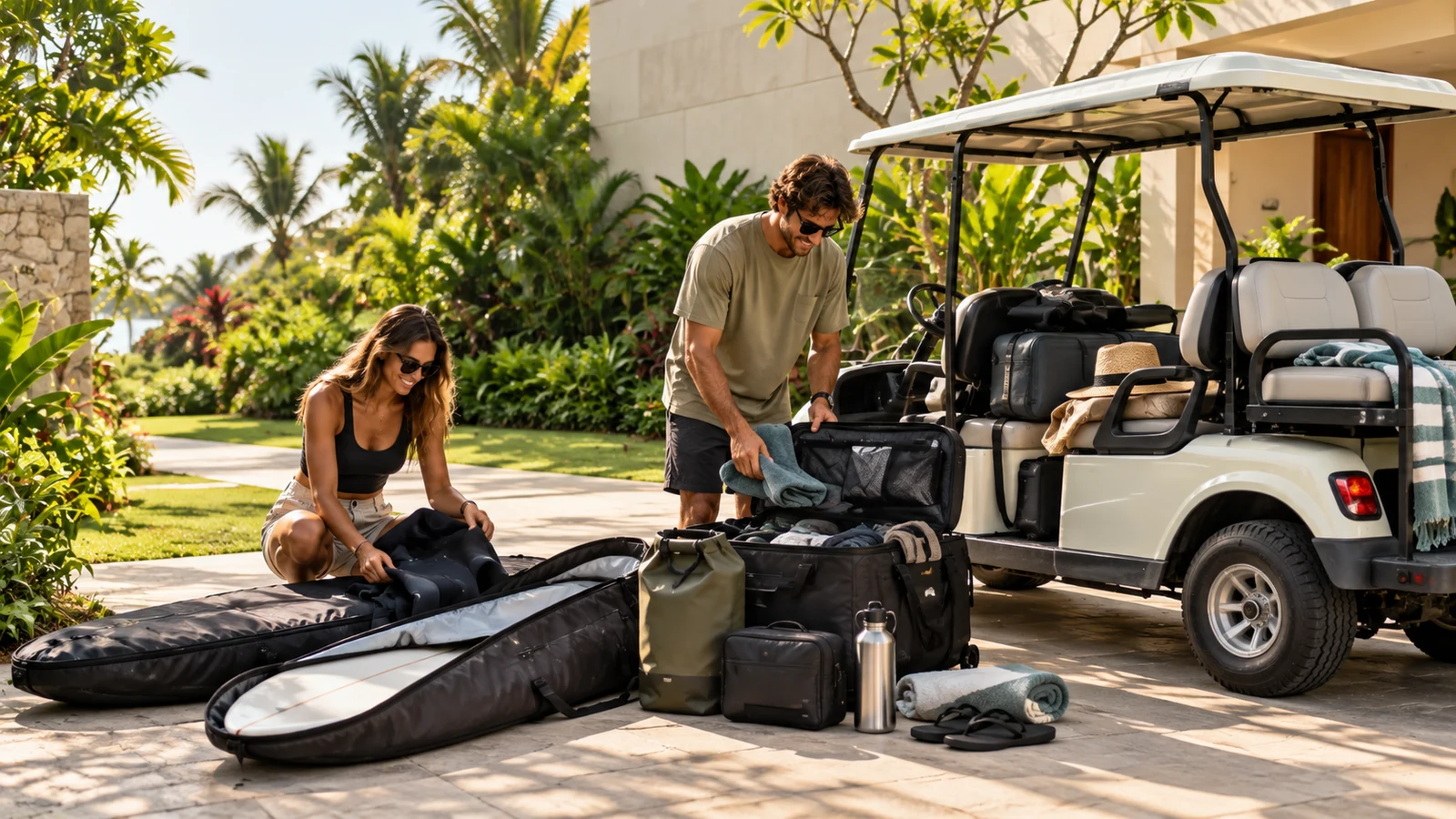
Start with your setup. Are you taking a first lesson, renting locally or bringing a board on the flight? Then divide your kit into what you need before the water, what you will want dry afterwards and what can stay in your room. That sequence helps more than a long list of specialist gear.
Pack for the return from the beach
Put water, sun protection, dry clothing and a bag for wet kit together. Decide where your phone and keys will go before you enter the water. If you are heading straight to lunch, a separate bag for wet gear and a clean shirt make the transition easier.
If an instructor supplies the equipment
Ask what the lesson includes and what you should wear or bring yourself. Ask how the instructor picks a board and what happens if it does not suit you once you arrive. Wait for that answer before buying something just because it appears on someone else's list.
If you rent a board
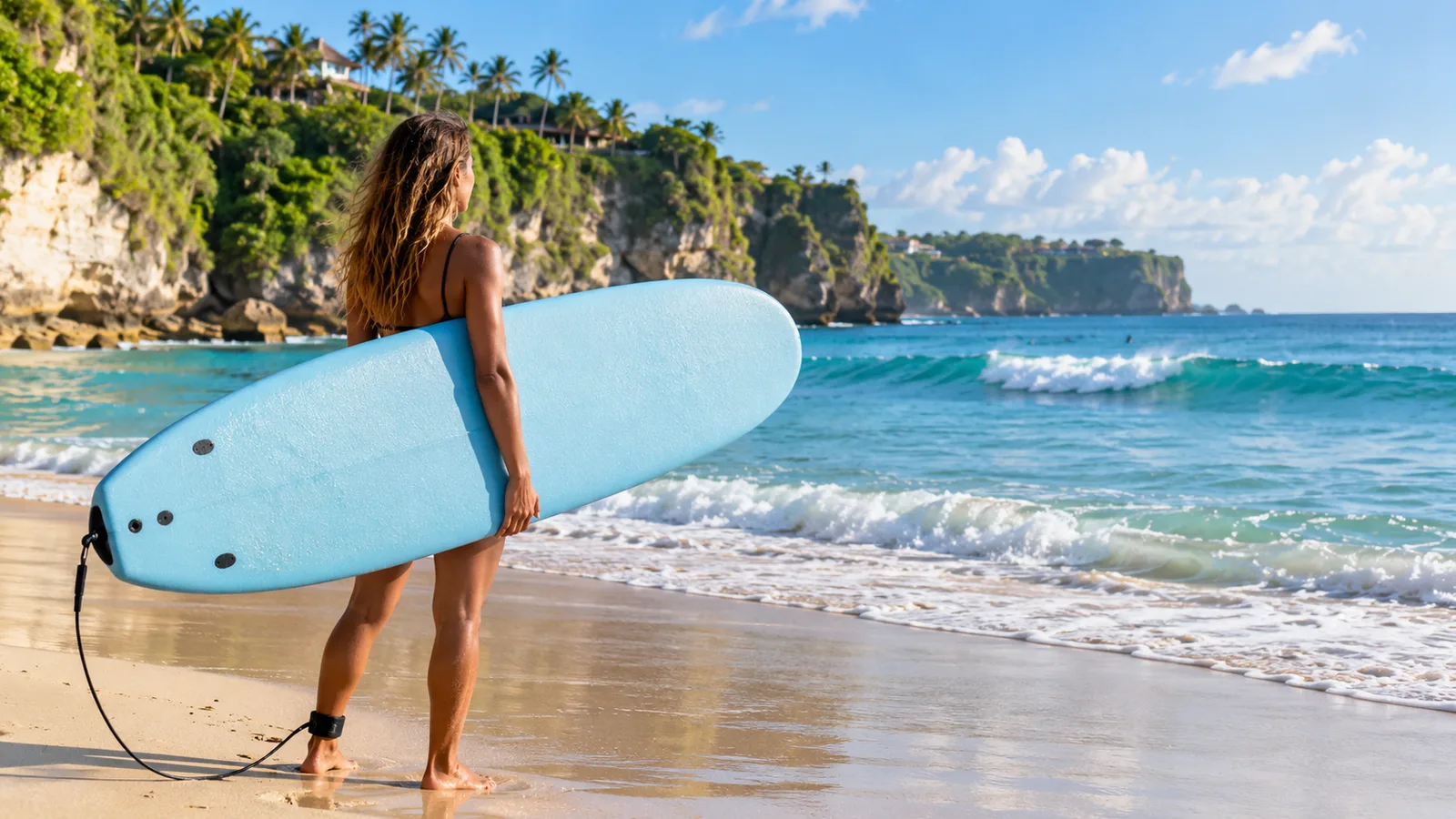
Agree on pickup and return times. Inspect the board with the shop, record existing damage and check what equipment is included. Ask whether you can swap boards if an instructor recommends another size. If you know the model or dimensions of a board you have used successfully, bring that information with you. How to choose your first board.
If you fly with your own board
Check your airline's current sports baggage rules for every leg. Measure the packed bag, including any protection, and confirm that the transfer vehicle can take it. Ask where you can leave the board between sessions. Save the bag measurements, driver's contact and pickup point on your phone.
A last check before you leave
Walk through the trip in order. Who carries the board? Where do valuables stay? Where will wet kit go on the way back? Each unanswered question usually needs one message or phone call. Solving it before the trip is more useful than filling another pocket.
What you need between sessions
Check whether there is somewhere to rinse and dry clothing. If you have sessions on consecutive days, bring a spare set for the water or make sure the first can dry in time. Keep documents and your charger separate from wet kit so you do not have to open that bag at a reception desk or in a vehicle.
Weigh the bag as you will check it in
A board bag gets heavier once protection goes in. Weigh it fully packed. Check dimensions and the booking process with the operating carrier for every leg. If the rules differ, note the strictest limit and keep any confirmations handy for the check-in desk.
🎒 Checklist by setup
| Setup | Check in advance | Keep accessible |
|---|---|---|
| First lesson | What is provided and where valuables go | Water, dry clothing and phone before entering the water |
| Rental | How the board is fitted, exchanged and returned | Shop contact and agreed terms |
| Own board | Baggage rules, packed length and vehicle fit | Bag measurements, driver contact and address |
🧳 Pack in the order you will need things
At the airport you need documents. Before a session you need the kit you wear and take to the water. If both are in the same compartment, you end up sorting everything in an awkward place. Put check-in items in an easy pocket and keep the beach kit together. Wet gear from that bag should stay away from electronics and documents.
Plan for the hour after the water
Check that you have something dry to wear for the ride back. In a group, give each person their own wet bag. If you plan to stop for food, decide in advance where boards and bags will go. This transition from the session to the rest of the day is worth picturing before you pack.
For sessions on consecutive days
After the first session, note what you used and what you were missing. If clothing does not dry overnight, put out a spare set. With a multi-day rental, confirm storage and transport for the board. These arrangements matter more than buying another accessory that happened to appear on somebody else's checklist.
📦 Pack three groups rather than one long list
The first group is for travel: confirmations, phone, charger and the things you need at check-in. The second goes to the session: sun protection, a dry change and a wet bag. The third stays in the room with what you need the next day. If you bring a board, trace the board bag separately. Who checks it in, who collects it on arrival, what vehicle will take it and where will it wait before the session? Give each step an owner, especially when part of the group flies separately. That shows which items you really need to carry and which you can arrange locally.
Walk through the trip to the session
Lay your gear out and imagine each step: leaving the room, meeting the driver, finding the instructor, changing, leaving valuables, getting out of the water and going back. At each point, identify the next item or contact you need. If one small bag handles the hours before the lesson, you do not need to carry a second suitcase. If the driver comes straight after the water, keep dry clothes where you can reach them without moving wet gear. Walking through the day exposes problems a generic packing list can miss.
Clarify what the equipment package includes
Equipment means different things to different organisers. Ask for the items by name and check what comes in your size. If you bring your own water clothing, ask what you can use during the lesson and where you will change. Confirm whether the instructor brings the board to the beach or you collect it beforehand. With a rental, separate what comes from the shop and what comes from the instructor. Two columns are enough to see what you would be paying for twice and what nobody has arranged.
Deal with wet kit when you get back
Separate water clothing, dry items and electronics as soon as you return. Ask where you can rinse things and hang them to dry. Do not assume the same set will be dry by an early lesson. If it stays wet, prepare a spare in the evening instead of discovering the problem on the way out. For a transfer or flight afterwards, allow space for a separate bag and weigh the luggage as packed. When sessions follow each other, an evening reset saves more time than rewriting the packing list every morning.
Follow your own board bag from door to door
Measure the bag with the protection you actually use. Check the flight and the vehicle after the airport. Before booking a transfer, give the driver the packed length, the number of passengers and the other bags. Find out where it can be loaded and unloaded. If the airline handles oversized luggage separately, make sure you know where the board is due to arrive before walking out with the suitcases. Save the baggage confirmation and driver details offline. If something is delayed, you can say exactly which part of the route is affected.
Pack a small reserve for consecutive sessions
Decide which things are worth bringing twice. A spare dry shirt takes little space and is useful after the water. A second bulky item may be unnecessary if you can get one from the organiser or dry it overnight. Set out two dry changes before the first lesson. Afterwards, separate wet things and pack for the second session while you remember what you actually used. If the pickup or location changes, adjust only the part of the bag that depends on the new route.
Pack for the person arriving after the rest of the group
If equipment is spread across several travellers, check that the first session does not depend on a bag arriving later. Keep your own water clothing and dry change with you, and list shared items separately. If one person is bringing the board bag, decide who meets them after baggage claim and how it travels onward. Discuss a delayed flight before it happens. You may be able to use the instructor's board, but confirm that arrangement. A single note with deadlines and owners is more useful than a long exchange about which bag contains each item.
###
Build a fallback kit for a delayed suitcase
Imagine the suitcase misses its flight and you have a lesson the next morning. What in your cabin bag would let you arrive and change? What will the organiser provide? Make a small fallback kit that fits the carrier's rules. Leave out things you can do without for one lesson. Save the organiser's contact so you can ask about missing equipment before rushing to buy it again. If your plan depends on your own board, ask the instructor whether the lesson would still make sense with another setup.
Work out where your belongings will wait
Ask whether there is somewhere to leave a bag and when you can reach it again. If that arrangement does not exist, choose what can stay in the room and who keeps the key. Do not build the whole plan around a companion watching phones and documents while you surf. They may want to leave and meet later. If you expect to leave something in the car, discuss it with the driver and ask whether you need to bring it to the beach at all. A single bag that goes through few handovers makes the session simpler.
Pack for a transfer straight after the water
Set aside clean clothes and travel documents before you leave. Put wet things in a separate bag that can be removed at the next stop without unpacking everything. Decide who handles the board if you are not returning to the same hotel. Ask the driver about pickup with your luggage and find out where you can change. Keep your charger, documents and keys in one known place. At each transfer you can then check three things instead of looking through a set of pockets while the others wait.
Common questions
What if the itinerary uses more than one airline?
Check each operating carrier. Confirm weight, dimensions and whether space for sports equipment must be arranged in advance.
Do I need a special bag for wet clothing?
A separate bag that keeps other things dry is enough. Decide where it will go after the session.