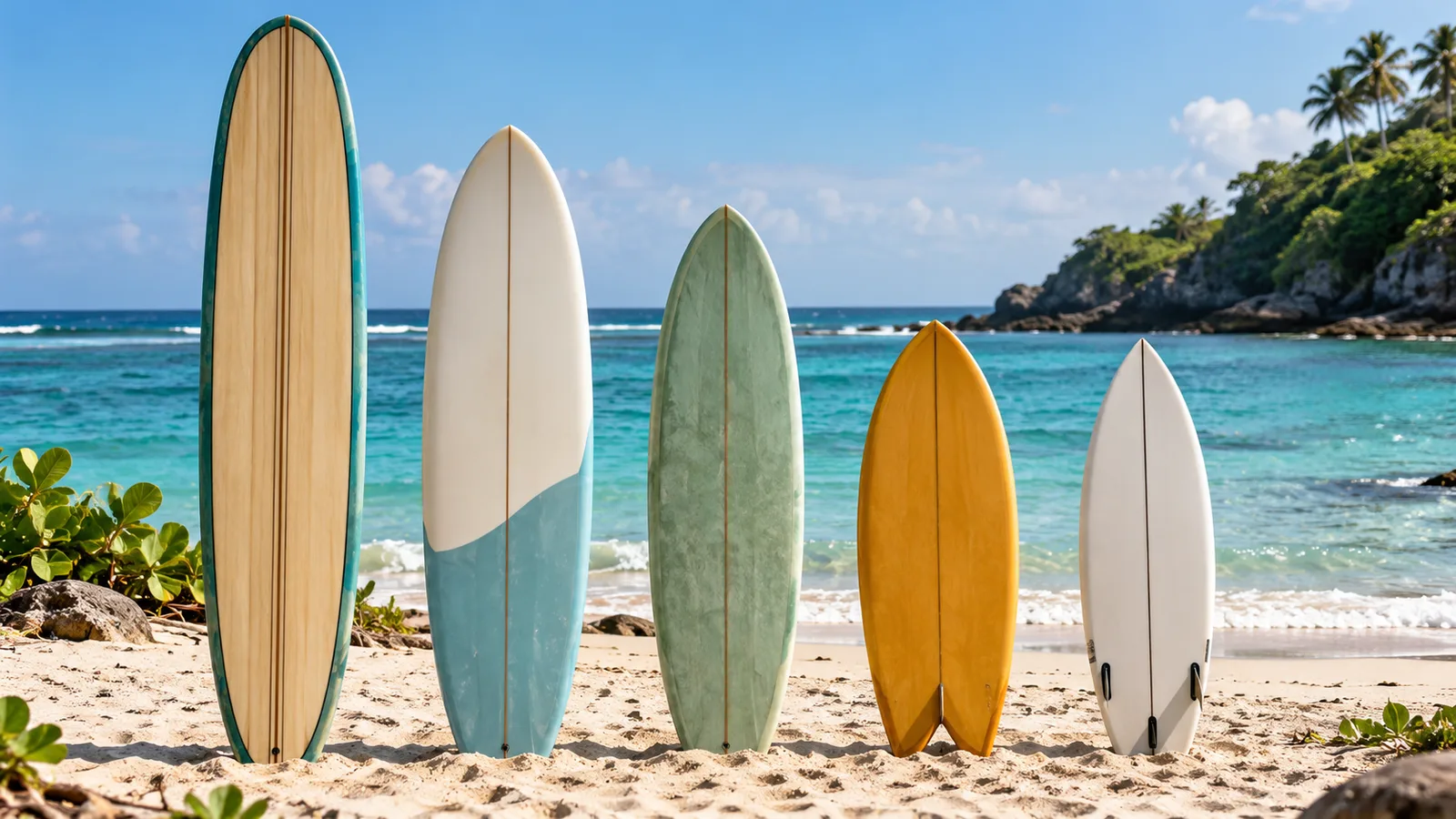
Choosing a surfboard becomes much easier once you understand the main types of surfboards and what each one is designed to do. Surfboards differ by much more than length: their shape, width, thickness, volume, rocker, rails and tail all change the way they feel in the water.
A longboard can look completely different from a shortboard, while a fish, funboard or midlength sits somewhere between them. Each shape has useful strengths. The right choice depends on your level, body weight, wave conditions and the kind of surfing you want to do.
Understanding surfboard types is especially helpful before renting or buying equipment. A board that matches your ability helps you catch waves, keep your balance and develop sound technique. A board that is too demanding can make surfing much harder while you are still learning the basics.
What determines how a surfboard rides?
Surfboards are made for different conditions, ability levels and styles. Length matters, but it is only one part of the picture.
📏 Length
Longer boards usually provide more glide and stability, which makes paddling and catching small waves easier. Shorter boards are generally more manoeuvrable, but demand more control.
↔️ Width
A wider board creates a larger, more stable platform under your feet. This is especially useful for beginners, while narrow boards demand more precise movements.
🧱 Thickness and volume
Thickness affects total volume and flotation. Volume is measured in litres and is one of the most important factors when matching a board to a surfer’s weight and experience.
⬆️ Rocker
Rocker is the curve from nose to tail. More rocker can help on steeper waves and tighter turns, while a flatter rocker tends to create speed and glide on smaller waves.
🦶 Rails and tail shape
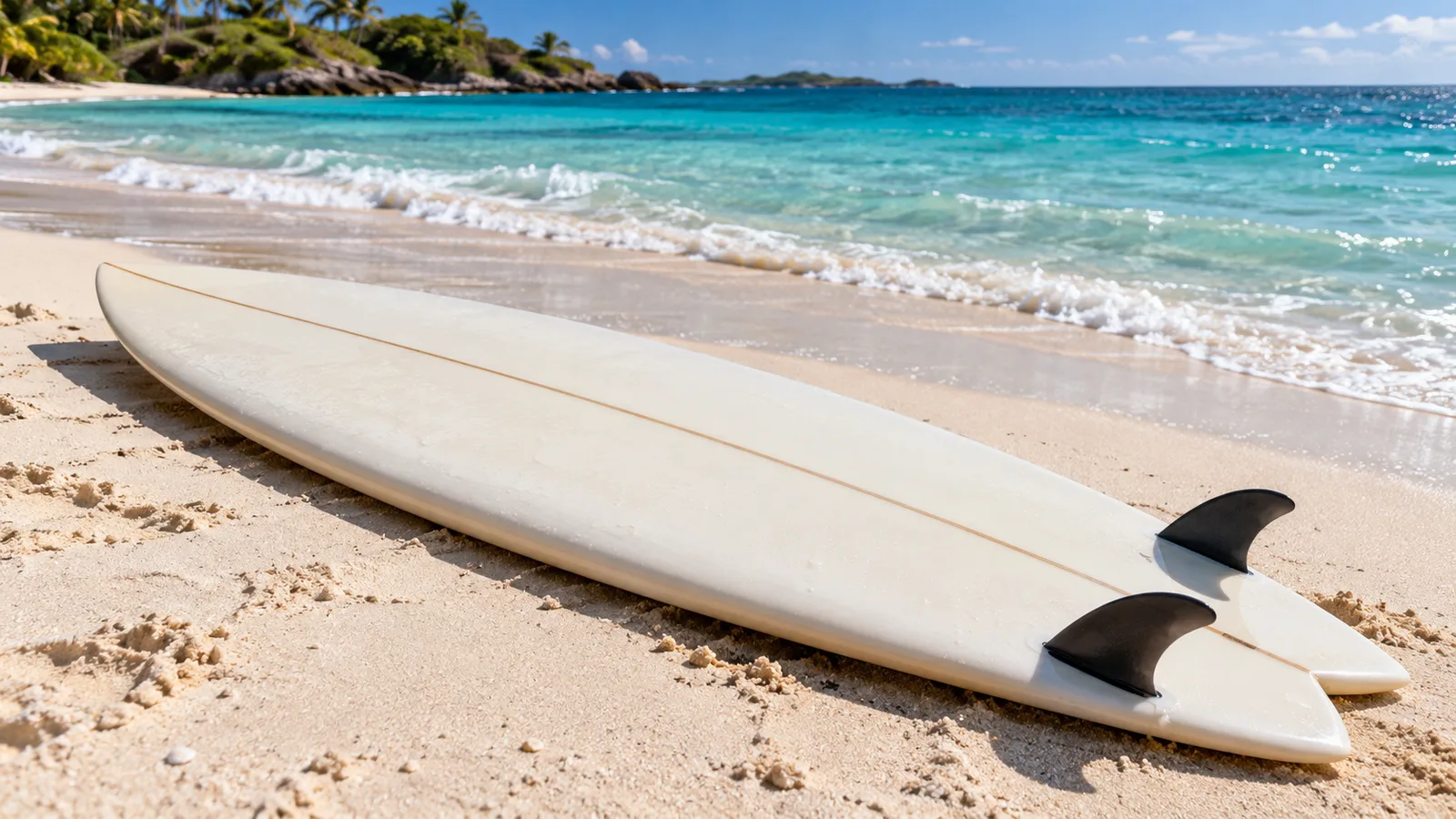
Rails are the side edges of a board. Fuller, rounder rails generally offer more stability; thinner rails let an experienced surfer make more precise turns. Tail shapes such as squash, round, pin and swallow also affect how water releases and how a board turns.
🏄 Bottom contour
The bottom shape changes how water moves under the board, creating different combinations of speed, stability and manoeuvrability.
All of these features work together. A long, wide board with plenty of volume will ride very differently from a short, narrow, low-volume board, even if their lengths are not far apart. That is why asking only how long a board should be is not enough to know whether it suits a specific surfer.
Main types of surfboards
The main surfboard categories were developed for different combinations of waves, stability and manoeuvrability. Some are particularly useful for beginners, while others suit experienced surfers.
🏄 Longboard
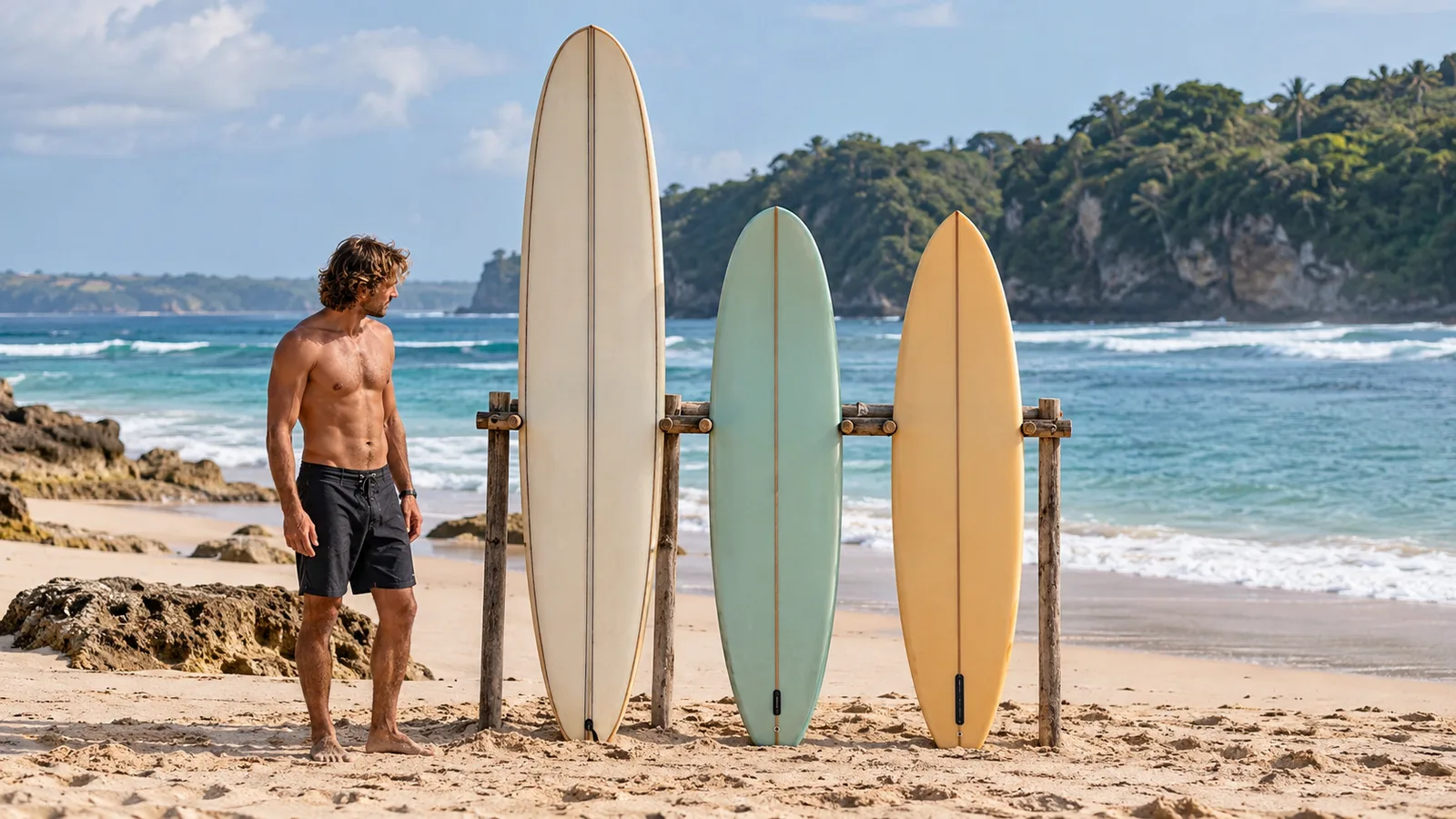
Longboards are usually around 9 feet or longer. Their length and volume provide excellent glide and stability. They suit smaller waves and classic longboarding, including walking the board and nose riding. A longboard can also be an excellent learning tool.
🟦 Soft-top
Soft-top boards are common in surf schools and suit beginners. They are usually wide, stable and buoyant, while the soft deck makes falls more forgiving. Their purpose is accessible, safer learning rather than maximum performance.
🟩 Funboard
Funboards sit between longboards and shortboards. They offer useful stability for a progressing surfer while remaining easier to turn than a traditional longboard.
🟨 Mini-malibu
A mini-malibu is shorter than a classic longboard but retains a wide, stable outline. It can be a good transition from first lessons to more confident surfing.
🌊 Midlength
Midlengths sit between longboards and shortboards. They combine paddle power and glide with greater manoeuvrability, and are popular with intermediate surfers. A suitably high-volume midlength can also work for a confident beginner.
🐟 Fish
Fish boards are relatively short and wide, often with a distinctive split tail. They can generate speed on smaller or weaker waves, but their shorter length makes them less forgiving for a complete beginner.
⚡ Shortboard
Shortboards are designed for performance and manoeuvrability. They usually have less volume and require stronger paddling, accurate positioning and developed balance. They generally suit intermediate and advanced surfers.
🔺 Gun and hybrid boards
A gun is a specialised, long and narrow board for powerful, large waves. Hybrid boards blend characteristics from different shapes, often for surfers who already know which features they want.
There is no universally best surfboard. Each type exists because different surfers want different things from their equipment.
Longboards, funboards and midlengths: what is the difference?
| Board type | Key characteristics | Who it suits | Main benefit |
|---|---|---|---|
| Longboard | Long, wide, high volume | Beginners to experienced surfers | Stability and glide |
| Funboard | Medium length, wide body | Beginners and intermediates | Balance of stability and manoeuvrability |
| Mini-malibu | Compact longboard shape | Beginners and progressing surfers | Easy entry into smaller waves |
| Midlength | Medium length, drawn-out outline | Intermediate and advanced surfers | Paddle power with more manoeuvrability |
| Shortboard | Short, narrow, lower volume | Intermediate and advanced surfers | Performance manoeuvres |
| Fish | Short, wide, specialised tail | Intermediate surfers | Speed in smaller waves |
A longboard emphasises glide and stability. Its length and volume let it enter a wave early and keep moving through slower sections. A funboard is a compromise: shorter than a longboard but usually wide and buoyant enough to remain stable. A midlength leans more toward glide and manoeuvrability, letting experienced surfers draw long lines with more control than on a classic longboard.
These boards can suit different stages of progression, but there is no strict sequence that every surfer needs to follow.
Shortboards, fish and hybrid surfboards
- Shortboard. A shortboard is built for manoeuvrability and performance. Its small length, narrower body and lower volume allow quick turns and precise control, but reduce stability and make paddling more demanding.
- Fish. A fish is short but noticeably wider than a standard shortboard. Its wider body and characteristic tail can generate speed on smaller waves, though the short length does not make it automatically suitable for someone learning balance.
- Hybrid. A hybrid combines features from several shapes. Some are designed to offer more stability than a standard shortboard while retaining part of its manoeuvrability.
- Step-up. A step-up is intended for larger, more powerful waves than a surfer’s usual shortboard. It has slightly more length and volume for paddling and control in stronger surf.
- Gun. A gun is a specialised large-wave board built for control, speed and confident entry into powerful waves, not beginner stability.
These board types become useful after you have mastered the basics. A beginner does not need to start on a shortboard simply because professional surfing often features one.
Which surfboard is best for a beginner?
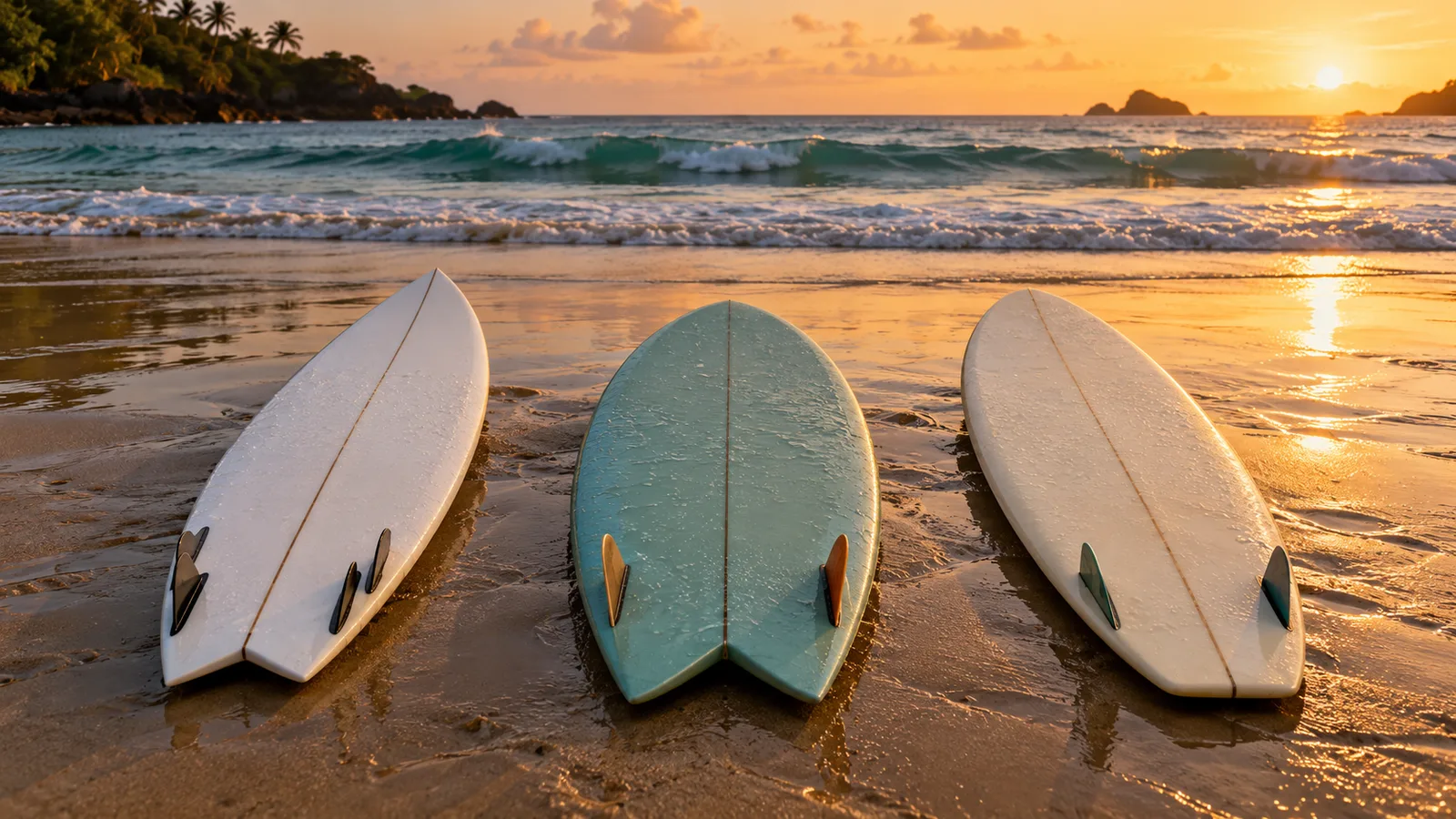
For a complete beginner, stability is usually more important than performance. Surfing requires repeated practice: paddling, choosing position, catching waves, standing up and holding balance. The right board makes those skills easier to learn.
🟦 Large soft-top
A large soft-top is often the simplest place to start because it combines flotation, width and stability. Its soft construction also makes falls more comfortable.
🏄 Longboard
A longboard offers glide and can make catching small waves easier. It can remain rewarding after the basics are in place.
🟩 Funboard and mini-malibu
A large funboard or mini-malibu can be an excellent compromise for someone who needs stability but does not want an extremely long board.
📈 High-volume midlength
A suitable midlength can work for a confident beginner, especially someone who is already comfortable in the water and has some experience.
🚫 Shortboard and fish
A classic shortboard is rarely the ideal first choice. Its lower volume and reduced stability can make the early stages harder. A fish may work well in certain small waves, but is usually better after the basics are secure.
Consider your weight, fitness, local waves and goals as well as your level. A light beginner may not need the same volume as a much heavier surfer. Someone learning on small, slow waves often benefits from a board with more volume. The goal is a board that gives you enough stability to learn without unnecessary difficulty.
How wave conditions affect board choice
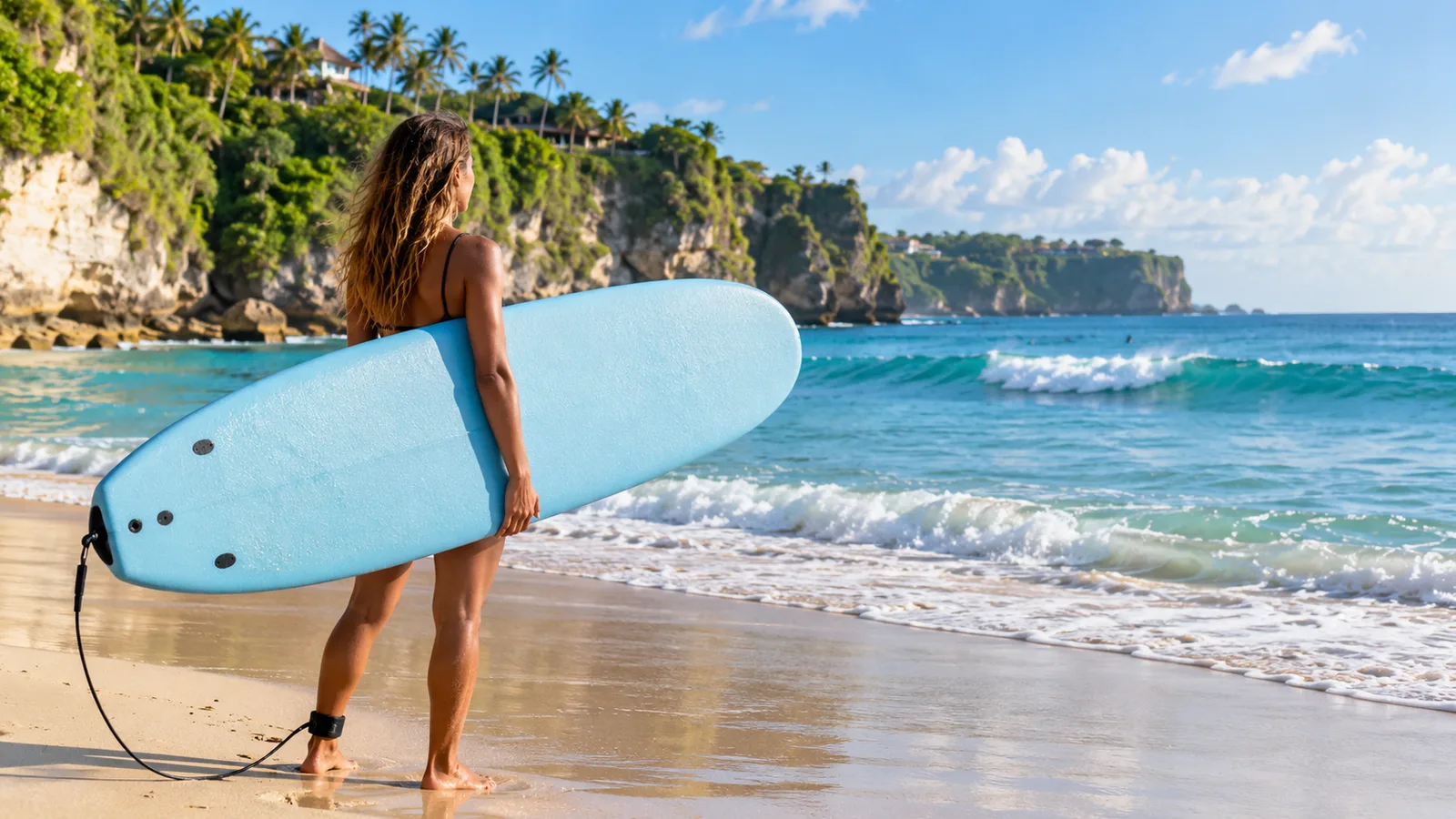
🌊 Wave size and power
Smaller waves often suit boards with more volume and glide. Bigger waves can require more control, a different rocker or a different outline. Slow, weak waves need a board that can create speed; more powerful waves allow more performance-oriented shapes.
📐 Wave shape and wind
A long, clean wave and a short, steep wave place different demands on equipment. Wind changes the water surface and wave quality, so a stable board with good glide can be more forgiving in imperfect conditions.
🌊 Depth, reef and your level
Some spots have shallow reef and others have sand bottoms. Equipment should always be chosen for the place. Conditions that feel normal to an experienced surfer can be too demanding for a beginner; a surfboard cannot compensate for unsuitable conditions.
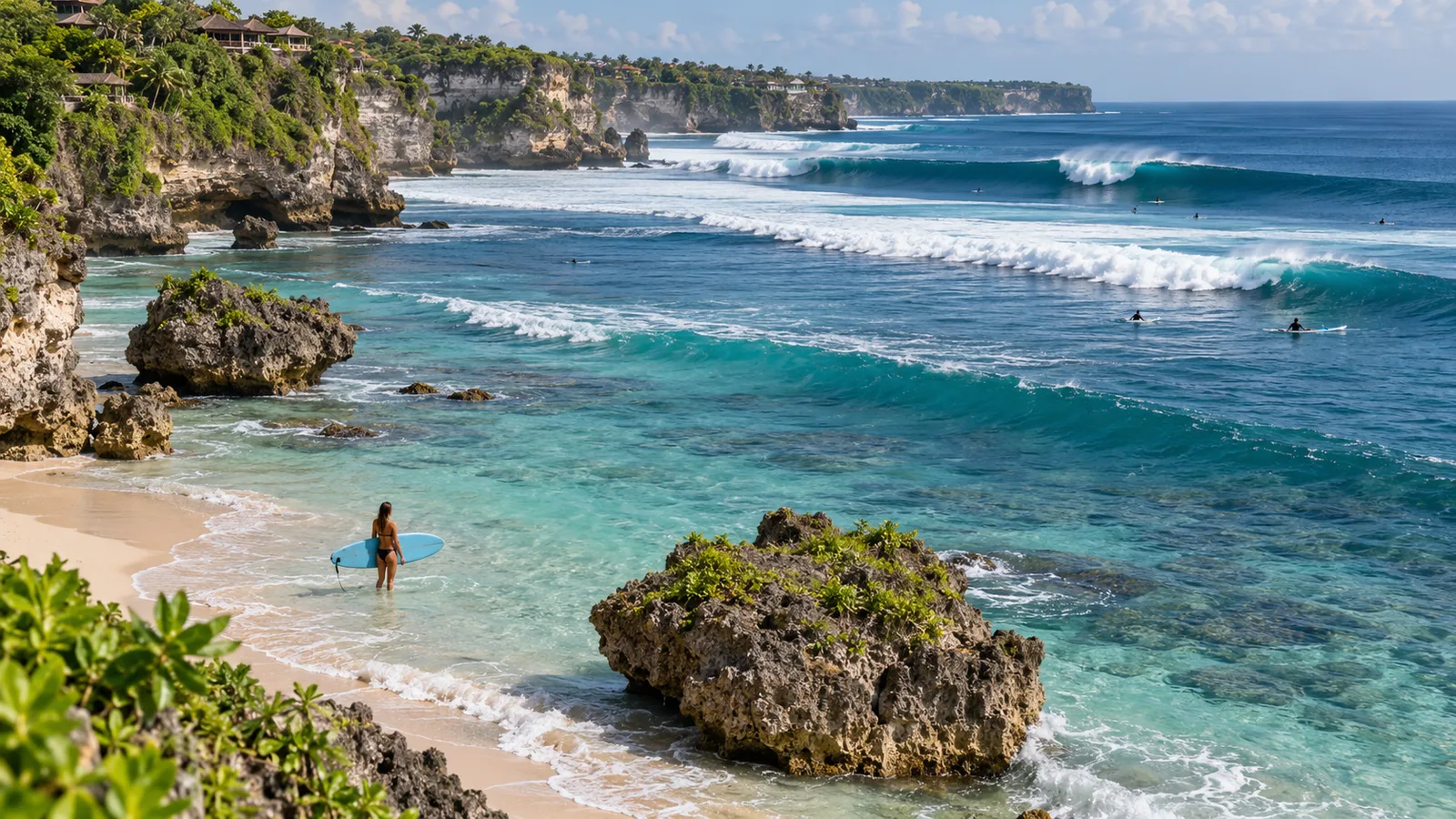
This matters in Bali. Uluwatu is known for powerful reef breaks, but a popular surf area does not mean every wave suits a beginner. If you are staying nearby, Surfside Bali can be a convenient base close to Suluban, while board and spot choice should always be based on your level and the conditions on the day.
How to choose a board for your current level
🟢 Complete beginner
Prioritise stability, flotation and easy wave entry. A large soft-top, longboard or stable funboard is usually the right direction.
🔵 Beginner after several sessions
Once you paddle confidently, catch small waves and stand consistently, you can begin to try more compact shapes.
🟡 Intermediate surfer
Consider midlengths, smaller funboards, fish or hybrids according to the waves you prefer.
🟠 Advanced surfer
Choice becomes more individual. Different conditions can call for different boards.
🔴 Specialised surfing
Big waves, high-performance shortboarding and other disciplines need equipment designed for the specific conditions and level.
Not every surfer needs to end up on a shortboard. Some enjoy longboards throughout their surfing life, while others use several board types according to the waves.
Why surfboard types matter
Knowing the main types of surfboards helps you make better decisions when renting or buying equipment and preparing for a surf trip. Longboards provide stability and glide; soft-tops make learning more accessible; funboards balance stability and manoeuvrability; midlengths combine glide with more performance; fish shapes generate speed on smaller waves; shortboards focus on manoeuvrability; guns are for powerful waves; and hybrids combine characteristics from several forms.
No single board is ideal for every surfer. The right choice depends on experience, weight, fitness, preferred waves and goals. Choose the board that lets you surf confidently in the waves in front of you, not the waves you hope to ride some day in the future.
Frequently asked questions
What are the main types of surfboards?
The main categories include soft-tops, longboards, funboards, mini-malibus, midlengths, fish, shortboards, hybrids and guns.
Which surfboard type is easiest for beginners?
A large soft-top or longboard is usually easiest because its width and volume provide stability, flotation and earlier wave entry.
What is the difference between a longboard and a midlength?
A longboard prioritises glide and stability, while a midlength is generally shorter and offers more manoeuvrability while retaining useful paddle power.