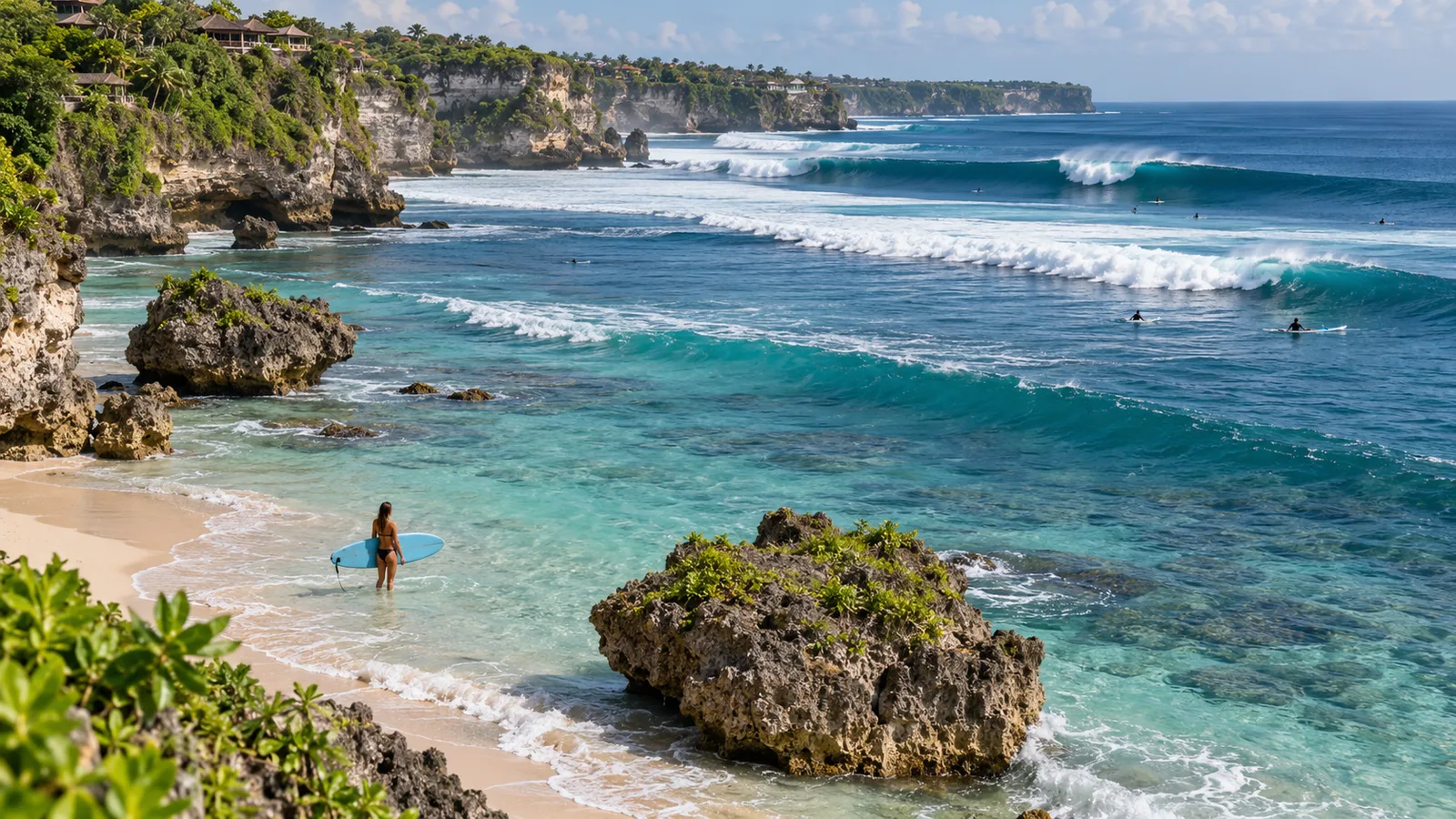
Begin on shore. Show the instructor what you can see: where surfers are waiting, where they are riding and how they return after a wave. Ask for a visible landmark that identifies your group's practice area. A useful explanation refers to the beach and the conditions in front of you.
Before you paddle for a wave
Look for someone already riding and for surfers closer to where the wave is beginning to break. If you cannot tell who has priority, let the wave pass and ask the instructor to talk through another example. For a learner, understanding one real situation clearly is worth more than trying to apply a rule to every wave at once.
On the way back to your group
Ask where to move after an attempt and which route to take back. Leave room for people who are turning their boards, getting to their feet or recovering balance. The shortest route is not always the route your instructor wants you to take. Use the path they show you around the riding area.
When there is a misunderstanding
Stop your attempt if you can do so safely and follow the instructor's directions. Acknowledge the mistake calmly if you got in someone's way. On shore, ask what you could see at the time, what cue you missed and what you can do differently when it happens again.
Ask for one running commentary
Have the instructor point out who is closest to the breaking section, where a rider is likely to finish and why one wave is worth letting go. If you are also learning to stand, practise that movement separately on land. Read the surf pop-up guide.
When more people enter the practice area
If it gets crowded, ask your instructor to show again where your group waits and where to finish an attempt. The landmark on shore may stay the same while the area you use changes. If you lose sight of the group, use the signal and route you agreed on. The instruction you learned on shore should make sense without a long conversation.
What to review afterwards
Remember one situation in which you were unsure. Perhaps you did not see a rider early enough or returned too close to the next learner. Ask the instructor to point out from shore where you could have seen the person sooner. A specific thing to look for is easier to carry into the next session than a general reminder to pay attention.
👀 Discuss three situations from shore
| What you see | What to ask your instructor |
|---|---|
| Someone is already riding | Where the rider is likely to travel |
| Two surfers begin paddling | What tells you who has priority on this wave |
| A group returns after an attempt | Where the return route runs and where to wait |
🌊 Why a line-up does not look like a queue on land
People change position and waves break in different places. Ask your instructor to show you a real example from shore. Have them explain what landmark to use, when to look for someone riding and why one wave is worth leaving alone. If the picture changes, ask them to talk through the new situation.
Agree on a few signals
Before entering the water, agree on a signal for waiting and another for returning. Show the instructor how you understood each one. If you cannot hear them at a distance, say so before starting. A signal you have checked on land is easier to use than a long explanation you are trying to recall while moving.
Tell the instructor when you tire
A tired learner may struggle to notice other people or keep several cues in mind. Tell the instructor you need a rest. Ask where you can pause without obstructing riders or other learners on their way back. After the break, return to a single simple task.
🧠 An observation drill before you enter
Ask your instructor to choose a few waves on which you can watch for the same thing. First, notice who begins to move. Then try to say where the rider will go and which space will open up. Let the instructor correct you on each example. If you only see the rider late, ask where to look sooner and what landmark helps. In the water, use the cue you agreed on. The exercise on land means you are less likely to be guessing when your attention is already divided between your board and the moving water.
Distinguish the waiting area from the riding area
Ask the instructor to point out both from shore and connect them to visible landmarks. Ask whether the return route changes when your group moves or another group arrives. Trace the route of someone who has finished an attempt and is coming back. Then trace the path of someone just starting. If the routes cross, ask about that specific point. The instructor can explain where to wait and how you will know when the way is clear. You learn how the space is used before you have to move through it yourself.
What to look at while you wait
Ask the instructor for one early sign that another surfer is about to move. Look at the people who are already riding or turning as well as the person who begins paddling. If following everyone is difficult, watch from shore first. Predict where one person will be in a few seconds and see what happens. During the lesson, follow the instructor's direction. If no cue comes or you are unsure you understood it, let the wave go. There will be a clearer opportunity to discuss what you saw without trying to solve it while moving.
Give other learners space to finish their tasks
Ask how the instructor calls learners and where the rest of the group waits. Avoid moving in just to hear better. If you miss a wave, return to the agreed order and find out when to try again. Leave room for someone who is starting or turning their board after an attempt. When another person misses an instruction, pass on only what you know and suggest they check with the instructor. Learners have different tasks, and a cue aimed at one person may apply to a different stage of the exercise.
Check the signals again after moving
When you move to another part of the beach, confirm where the group waits and how to return. If noise, wind or distance makes the instructor hard to hear, go over the agreed signals again. Show how you understood them. One signal may mean stop, another may mean wait or return. The exact agreement is for your instructor and group. If you cannot tell what has been signalled, pause and clarify. A wave can pass while you make sure you understand how the group will move.
Debrief a misunderstanding without arguing about rules
Start with what each person could see. Who began moving, who was already riding, and where did your paths meet? If you got in the way, acknowledge it and follow the instructor's guidance. On shore, ask for a similar example and work through it in order. Aim to find one cue you can notice earlier next time. If the conclusion is just “pay more attention”, ask exactly where to look and at what point. A visible cue gives you a task you can practise.
Try an observation exercise with three people
If you came as a group, ask each person to watch one part of the movement. One watches for someone already riding. Another watches for someone preparing to start. The third follows the route people take back. After a few waves, compare what each person saw. Ask the instructor to put the observations into one sequence. Then repeat the exercise, each person concentrating on the cue they found hardest to notice. The task on the water can stay simple because you have already seen how several movements affect the same space.
If someone appears in your path
Before entering, ask what the instructor wants you to do when you cannot complete an attempt or somebody moves close. In the moment, follow the agreed directions and stop the attempt when it is safe to do so. Afterwards, discuss what might have been visible earlier: a moving board, the direction of a rider or a shift in the group. Leave any disagreement until people have finished moving. If the crossing point is unclear, ask the instructor to show it on a sketch or another example from shore.
Leave room for people learning at a different speed
One learner may need another demonstration while another is ready to move on. Let the instructor explain the order. Wait in the agreed area instead of starting a separate attempt. If the pause is long enough that you lose track of what happens next, ask. You can use the time to watch how other people's positions change and picture the route after the exercise. When it is your turn, clarify just the remaining question. That is easier for the group than everyone moving closer to see what will happen.
Bring one observation to the next lesson
Ask a new instructor to point out the areas and signals again. Another beach or group may work differently. Mention one question from your last session. You may not have noticed an approaching rider in time, or you may have been unsure where to wait after returning. The instructor can explain it using the conditions in front of you. Afterwards, write down one thing that helped you see the situation sooner. It will give you something specific to discuss even when the next session takes place somewhere else.
Common questions
Do beginners need to memorise every rule first?
Start with the return route, signals and a few examples of priority. Ask the instructor to explain the situations you see on the day.
How do I know when to try again?
In an instructor-led session, follow the instructions you agreed on. If you miss a signal or lose track of other people, let the attempt go and ask.