
Checking the Uluwatu surf forecast before heading into the water can make a big difference to the quality and safety of a surf session. A forecast provides more information than simply showing whether the waves are expected to be good. Swell height, swell direction, swell period, wind and tides all influence how the waves behave once they reach the reef.
This is particularly important in Uluwatu because the area is made up of several different surf sections rather than one single break. The Peak, Racetrack, Temples, Outside Corner and The Bombie can respond differently to the same swell depending on its size, direction, period and the amount of water covering the reef.
A useful Uluwatu surf report should therefore be treated as a guide rather than a guarantee. Forecast information is most valuable when combined with an understanding of the local breaks and an actual observation of the ocean before entering the water.
- 01Read swell direction, height and period together rather than relying on one number.
- 02Check wind and tide for the specific time you plan to surf.
- 03Watch the ocean and choose a section that matches your ability before entering.
What Does a Uluwatu Surf Forecast Show?
A surf forecast usually combines several different measurements. Understanding what each one means makes it easier to interpret the conditions and decide whether they are suitable for a particular session.
🌊 Swell Height
Swell height indicates the approximate size of the incoming swell in the open ocean. It gives a general idea of how much wave energy is approaching the coast, but it does not mean that every wave breaking at Uluwatu will be exactly that height.
The shape of the reef, the exposure of each section and local conditions can all influence the size and shape of the waves. Two breaks can therefore behave very differently even when they are exposed to the same swell.
🧭 Swell Direction
Swell direction describes the direction from which the swell is approaching. This is an important factor at Uluwatu because the orientation of the coastline and reef determines how effectively different sections receive incoming wave energy.
A swell of the same height can produce different conditions depending on its direction. Southwest swells are commonly associated with the main Uluwatu surf area and are an important direction to watch when checking a forecast.
⏱️ Swell Period
Swell period is the amount of time between individual waves in a swell, measured in seconds. It provides useful information about the energy carried by the swell.
A longer-period swell generally carries more energy and can produce powerful waves when it reaches a shallow reef. This is why wave height should not be considered without looking at the period as well.
💨 Wind
Wind has a major influence on the quality of the waves. Offshore wind can help create cleaner and more organised wave faces, while onshore wind can create surface chop and make conditions less clean.
For Uluwatu, southeast winds are commonly associated with favourable offshore conditions. However, both wind direction and wind strength need to be considered.
🌙 Tide
Tide describes changes in the water level over the reef. Because many Uluwatu waves break over relatively shallow reef, the tide can significantly change the character of a surf session.
Different sections respond differently to changing water levels. The ideal tide can also depend on the size of the swell and the experience of the surfer.
How Swell Size Changes the Conditions in Uluwatu

Swell size is one of the first things surfers usually check, but the number shown in a forecast should always be interpreted together with swell direction and period.
A smaller swell can produce manageable conditions on some sections, while a larger swell can quickly increase the power of the reef. Uluwatu is exposed to Indian Ocean swell, which contributes to its reputation for powerful and consistent surf.
🏄 Small Swell
Smaller swells may make some inside sections more accessible, but a small forecast does not automatically mean beginner-friendly conditions.
The reef, currents, entry points and the experience of the surfer remain important. Even relatively small waves can behave differently depending on the tide and direction of the swell.
🌊 Medium Swell
A medium-sized swell can activate several sections of the Uluwatu reef and offer more options for experienced surfers.
At this size, comparing swell conditions with the tide becomes particularly useful. Changes in water depth can affect the speed, shape and power of individual sections.
💥 Large Swell
Large swells can significantly increase the power of the Uluwatu reef. Outer sections such as Outside Corner and The Bombie become increasingly important for experienced surfers, while other areas can become much more challenging.
When the swell becomes large, it is more useful to ask which section is appropriate for the conditions and your ability rather than simply whether Uluwatu is “working”.
Why Swell Period Matters for Uluwatu Surfing
Swell period is one of the most useful parts of a forecast, especially when trying to understand why two swells of similar height can produce completely different waves.
A longer-period swell has generally travelled a greater distance and carries more energy. When this energy reaches a shallow reef, the wave can become faster, steeper and more powerful.
This is particularly relevant in Uluwatu, where reef breaks can transform incoming ocean energy into powerful waves. Looking at height and period together therefore provides a much better indication of the potential conditions than height alone.
📏 Wave Height
Wave height provides an initial indication of the scale of the swell.
However, it should not be interpreted as the exact size of every breaking wave. Local bathymetry and the characteristics of each surf section affect the final wave size.
⏱️ Wave Period
The period gives additional information about the energy behind the swell.
A longer period can mean that a swell has significantly more energy, even if its forecast height does not appear particularly large.
🧭 Swell Direction
Direction determines how the incoming energy approaches the coastline.
For Uluwatu, southwest swell is commonly considered favourable, although the exact response varies depending on the individual section and overall conditions.
How to Read Wind in a Uluwatu Surf Report
Wind can change a surf session from clean and organised to rough and difficult within a relatively short period. This makes wind direction one of the most important parts of an Uluwatu surf report.
An offshore wind blows from the land towards the ocean and can help hold up the wave face. An onshore wind blows towards the land and usually creates more texture and chop.
In Uluwatu, southeast winds are commonly associated with offshore conditions. However, the strength of the wind matters as much as its direction.
🌬️ Light Offshore Wind
Light offshore wind can create clean and well-shaped wave faces when the swell direction is also favourable.
These conditions are often attractive to surfers because the waves can remain organised without the wind becoming strong enough to create additional challenges.
💨 Strong Offshore Wind
Strong offshore wind is not automatically better than light offshore wind.
Very strong winds can affect the shape of waves, make paddling more difficult and create challenging conditions in the lineup. The best setup depends on the interaction between wind, swell and reef.
🌪️ Onshore Wind
Onshore wind generally makes the surface of the ocean rougher and can reduce wave quality.
A large swell therefore does not automatically mean good surfing. If the wind is poorly aligned, the resulting conditions may be less clean than the swell forecast initially suggests.
How Tides Affect Surfing in Uluwatu
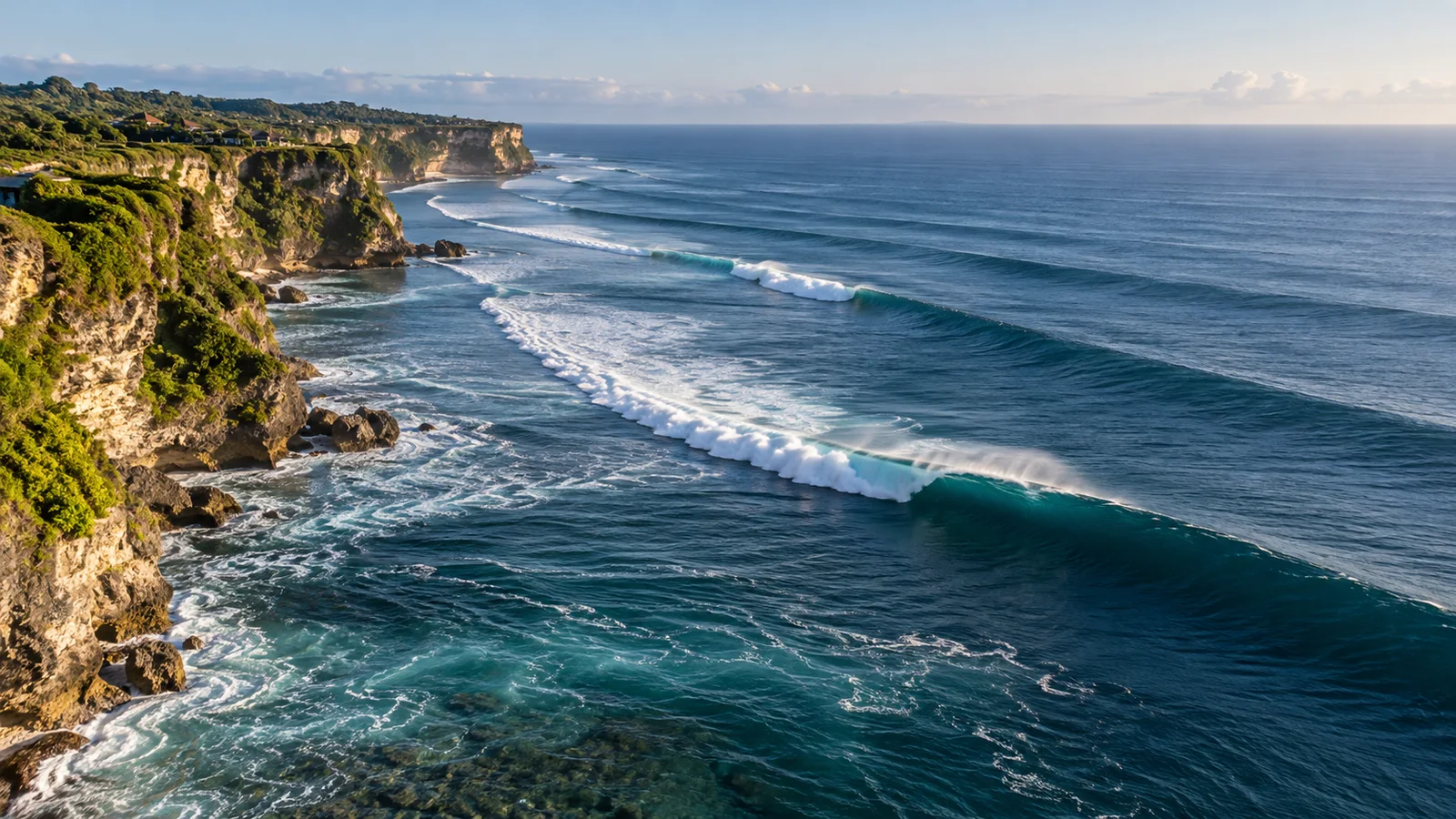
Tides are particularly important in Uluwatu because many of the surf sections break over reef. As the water level rises and falls, the depth above the reef changes, which can influence the shape, speed and power of the waves.
There is no single tide that is always best for every Uluwatu surf spot. The ideal conditions depend on the individual section, swell size, swell direction and the ability of the surfer.
🌑 Low Tide
Low tide can expose shallower parts of the reef and make some waves faster and more critical.
When the swell is larger, low tide can create particularly powerful conditions on certain sections. Surfers should therefore consider their experience and the specific break before entering.
🌗 Mid Tide
Mid tide can provide a different balance between water depth and wave shape.
Depending on the swell and the section, it can create useful conditions for experienced surfers. However, the forecast should still be considered as a combination of several factors rather than relying on tide alone.
🌕 High Tide
Higher water levels can change the shape and character of the waves by adding more water over the reef.
On smaller swells, a higher tide may improve conditions at some sections, while other areas can become softer or less defined. The effect depends on the specific break and the incoming swell.
How to Combine Swell, Wind and Tide
The most useful way to read a Uluwatu surf forecast is to consider the main variables together. Looking at one number in isolation rarely provides enough information to understand what the ocean will actually look like.
- Start with Swell Direction
Check where the swell is coming from and how that direction interacts with the Uluwatu coastline.
Southwest swell is commonly associated with favourable conditions in the area, but the exact effect depends on the individual surf section and the overall setup.
- Check Swell Height
Next, look at the forecast swell height to understand the approximate scale of the incoming energy.
Remember that forecast swell height is not the same as the size of every breaking wave. Reef shape and local conditions can significantly influence what happens at the coast.
- Look at the Swell Period
A longer period generally indicates a more energetic swell.
Combining period with height gives a better understanding of how powerful the incoming swell could become when it reaches the reef.
- Check Wind Direction
Look at the direction of the local wind and determine whether it is offshore or onshore for the particular coastline.
Southeast winds are commonly associated with offshore conditions around Uluwatu, although the strength of the wind should also be considered.
- Check Wind Strength
A favourable direction does not automatically mean perfect conditions.
Strong winds can affect the wave face and make the session more demanding, so wind strength should always be considered alongside its direction.
- Check the Tide
Look at the tide during the time you plan to surf.
The effect of the tide depends on the specific section, swell size and reef depth, so avoid relying on a simple rule such as “low tide is best”.
- Compare the Forecast With the Ocean
Forecasts are models and cannot capture every local change in conditions.
Before entering the water, observe the waves, currents, wind, crowd and entry and exit points. The actual ocean should always be part of the decision.
How to Choose a Uluwatu Surf Spot From the Forecast
Uluwatu should not be treated as one single surf break. The coastline contains several sections, each with its own characteristics and response to swell, tide and wind.
| Surf section | General character | What to consider in the forecast | Suitable for |
|---|---|---|---|
| The Peak | Central reef section with powerful waves | Swell size, period and tide | Experienced surfers |
| Racetrack | Fast and powerful section | Tide, swell size and reef exposure | Experienced surfers |
| Temples | Distinct reef section with changing conditions | Swell direction, tide and currents | Experienced surfers |
| Outside Corner | Exposed outer section | Larger swell, period and wind | Advanced surfers |
| The Bombie | Powerful outer reef area | Large swell, period, wind and safety conditions | Highly experienced surfers |
The same forecast can therefore produce different conditions at different sections. When checking the report, it is more useful to ask which part of the reef is working and whether it matches your ability than to judge Uluwatu as a single destination.
How to Use a Daily Uluwatu Surf Report
A daily Uluwatu surf report is most useful when it becomes part of a routine rather than something checked once before leaving the hotel.
The forecast can help you understand the expected conditions, but the actual ocean may differ because of local wind changes, swell behaviour, currents and the interaction between the waves and the reef.
📱 Check the Forecast Before Your Session
Look at the swell, period, wind and tide several hours before you plan to surf.
This gives you enough information to understand how conditions are expected to develop and decide which part of Uluwatu may be worth checking.
🌅 Check It Again Later
Conditions can change throughout the day, particularly when wind direction or swell conditions are changing.
A second look closer to your planned session can provide a more relevant picture than relying entirely on an earlier forecast.
👀 Watch the Waves
Spend some time observing the ocean before entering.
Look at the size of the sets, the current, the crowd and the way waves are breaking across the reef. This can reveal information that a forecast cannot show.
🏄 Match the Conditions to Your Ability
A forecast showing clean waves does not mean that every section is suitable for every surfer.
Consider your experience, equipment and comfort level before choosing where to enter the water.
What Is the Best Surf Forecast for Uluwatu?
There is no single number that can tell you whether the conditions at Uluwatu will be good. A more useful approach is to combine swell height, swell direction, swell period, wind and tide.
Southwest swells and southeast winds are commonly associated with favourable conditions in Uluwatu, but the ideal combination depends on the size of the swell, the individual reef section and the experience of the surfer.
A good Uluwatu surf forecast should therefore help answer several questions: How large is the swell? Where is it coming from? What is its period? Which way is the wind blowing? How strong is it? What will the tide be when you want to surf? And which section of the reef matches those conditions?
Surfside Bali is located on Pantai Suluban Street in Uluwatu, close to the area's established surf environment. The property is positioned around a surf-focused stay, making it a practical base for travellers who want to check the conditions and organise their days around the ocean.
Final Tips for Reading a Uluwatu Surf Forecast
Reading a Uluwatu surf forecast becomes much easier once the different indicators are considered together. Swell direction shows how the energy approaches the reef, swell period provides information about the energy behind it, wind affects the quality of the wave face and tide changes the depth over the reef.
The most important thing is not to rely on a single number. A large swell can produce poor-quality waves if the wind is unfavourable, while a moderate swell with a good direction, period and offshore wind can create excellent conditions.
Uluwatu is also a collection of different reef sections rather than one single break. Always compare the forecast with the actual ocean, choose a section appropriate for your ability and remember that conditions can change throughout the day.
Frequently asked questions about the Uluwatu surf forecast
What should I know about the Uluwatu surf forecast?
Start with the practical details in this guide, then plan the Uluwatu surf forecast around your travel dates, preferences and current local conditions.
How far ahead should I plan the Uluwatu surf forecast?
Planning the Uluwatu surf forecast before you arrive makes it easier to choose suitable dates, transport and accommodation without rushing once you are in Uluwatu.
Where is a convenient base in Uluwatu?
A stay close to the Bukit Peninsula keeps beaches, restaurants and surf breaks within easy reach while giving you more flexibility each day.